
Uncategorized
Quest Cookies & Cream Cheesecake Truffles Recipe


Quest Cookies & Cream Cheesecake Truffles Recipe

You could’ve bought a costume. Instead, you’ve somehow become a costume designer with a deadline. Respect. Keep the creative marathon going with Questified Cookies and Cream Cheesecake Truffles, made with Quest Cookies and Cream Crispy Protein Bars, whipped cream cheese, chocolate, sprinkles, and high quality protein. Now finish that costume. The judges are imaginary, but winning still matters.
Check out the full recipe below:

NUTRITIONAL INFO
COOKIES & CREAM CHEESECAKE TRUFFLES
Yields: 10 servings | Serving Size: 1 truffle
Calories: 80 | Protein: 5g | Fat: 6g | Net Carb: 4g
Total Carb: 12g | Sugar: <1g
Ingredients
COOKIES & CREAM CHEESECAKE TRUFFLES
Method
- Bread the bars into smaller pieces and place them into a food processor and blend until small crumbles form.
- Add in the cream cheese and combine. Separate the mixture into 10 evenly sized balls.
- Melt the chocolate and coconut oil together in a microwave safe bowl and stir until smooth.
- Dip each ball in the chocolate, letting the excess drip off before placing it on a baking sheet lined with parchment paper.
- Top with sprinkles and chill until chocolate is solid.
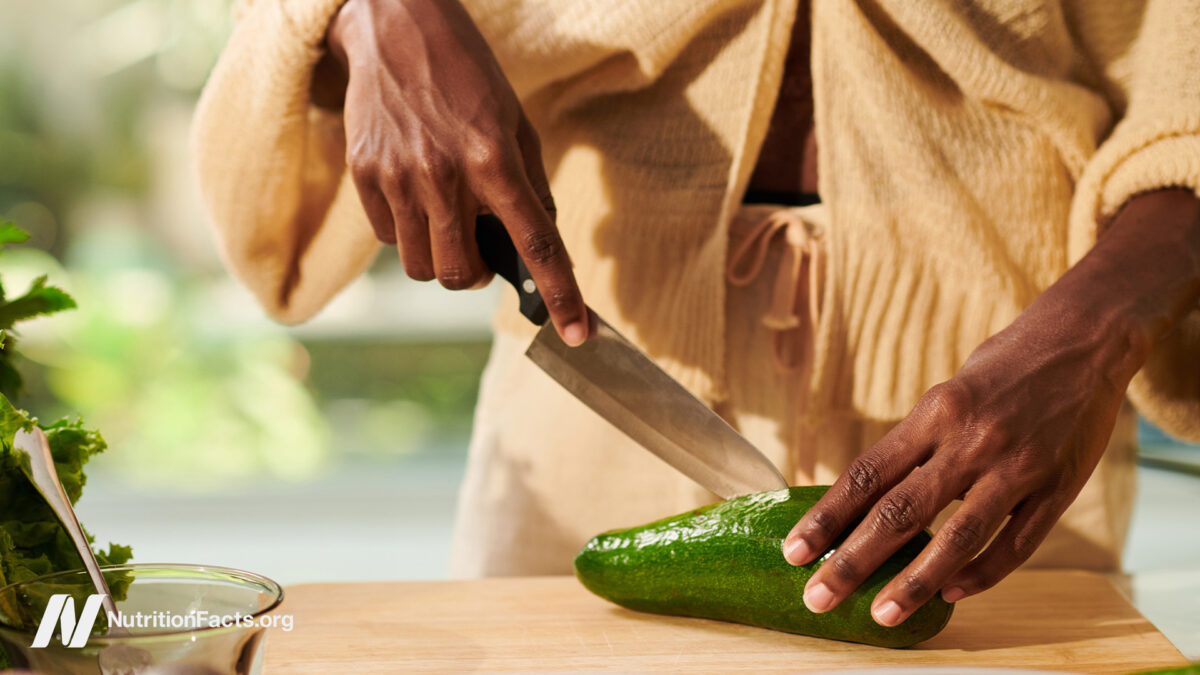
How a Plant-Based Diet Could Help Close Racial Health Gaps
Why are Black Americans sicker and die younger than their white counterparts, and what can we do about it?
During the COVID-19 pandemic, the death rate for African Americans was as much as six times higher than that of white Americans. The higher Black pandemic deaths placed a harsh spotlight on their longstanding higher mortality and diminished longevity in general. “Unfortunately, diminished [African American] life expectancy predates the COVID-19 pandemic for decades.” The Black-white death gap for women is about three years, and for men, closer to five years.
The COVID-19 death disparities may have to do with “limited access to healthy food” in predominantly Black communities, “housing density, the need to work or else, the inability to practice social distancing,” but also the underlying “burden of ill health.” Increased COVID-19 mortality and complications occur more often in people with pre-existing conditions like hypertension, obesity, diabetes, and cardiovascular disease, comorbidities that are more common among African Americans. As you can see below and at 1:25 in my video How a Plant-Based Diet Can Help Reduce Racial Health Disparities, that means more high blood pressure, more diabetes, more strokes, and more likely to die at early ages from all causes put together.
The question is why? Why do “Black Americans live sicker and die younger than their white counterparts”?
One big factor is socioeconomic status. In the United States, race is closely tied to class, with African Americans about twice as likely to be living in poverty. On average, education levels are lower as well. However, even among African Americans whose socioeconomic status is comparable to that of white people, despite higher education and more socioeconomic resources, health outcomes are still poorer. Part of that has to do with lifestyle behaviors. For example, fewer than 5% of African American adults met physical activity guidelines. Smoking rates are comparable, though African Americans tend to be exposed to more second-hand smoke and have lower quit rates. This may be because they’re more likely to use menthol cigarettes, which enhance nicotine’s addictive potential. Why menthols? Because tobacco companies’ marketing for mentholated products targets African Americans, as you can see in the ads below and at 2:43 in my video.
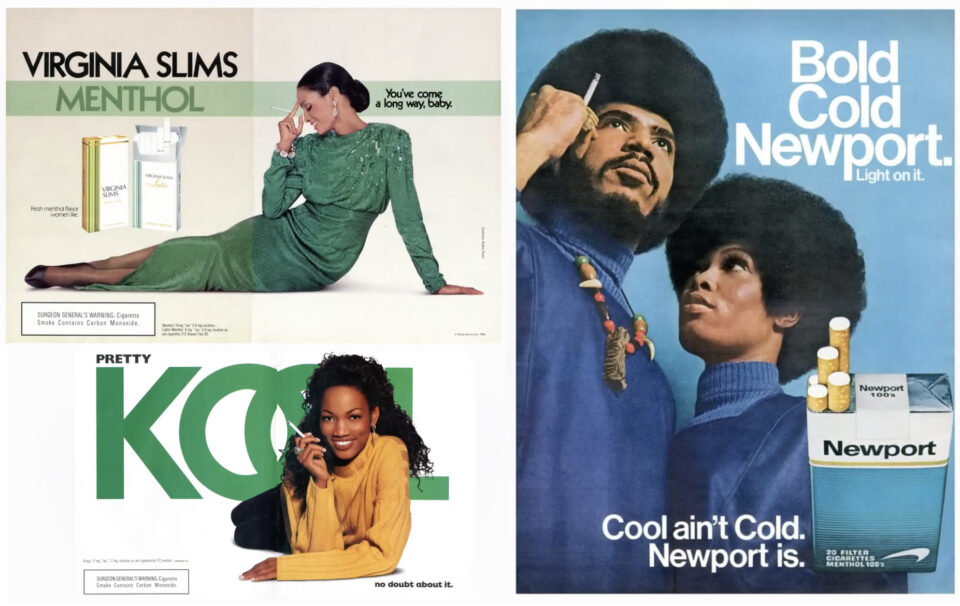
Black lives…Black lung.
Similarly, food messages on African American television shows reveal that not only does Black prime time contain more food commercials, but African American audiences may be receiving nearly three times as many ads for low-nutrient junk like candy and soda. That may be one reason why African Americans tend to consume fewer fruits and vegetables and are more likely to eat junkier foods. Of course, where are you going to get those fresh fruits and vegetables? There are fewer supermarkets in Black neighborhoods compared to white neighborhoods—as in, they have four times fewer supermarkets. What Black neighborhoods do excel in, though, is fast food. Predominantly Black neighborhoods have 60% more fast-food restaurants per square mile compared to predominantly white neighborhoods.
Now, of course, “dietary behaviors alone do not fully explain the significant differences in diet-related disease patterns between racial groups.” There are differences in employment, poverty, home ownership, and healthcare access, as you can see below and at 3:54 in my video.
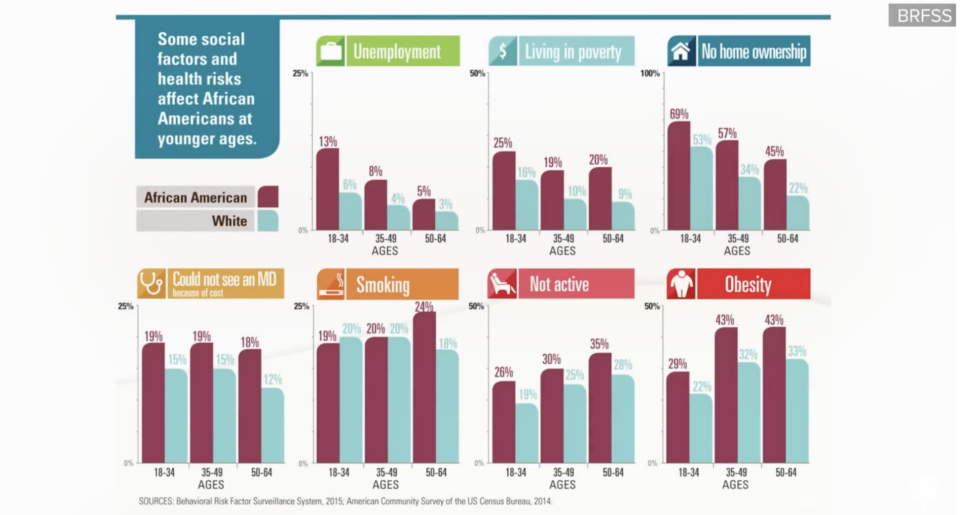
All of these factors can affect outcomes. But “[w]hile there are many social and economic factors such as racism and income inequality that contribute to health disparities, there is good evidence that simply eating a more plant-based diet could eliminate disparities in [cardiovascular disease] and diabetes.”
Here are the diabetes data. Even after controlling for education, income, physical activity, and Body Mass Index (BMI), non-Blacks eating strictly plant-based diets had 57% lower odds of diabetes. Among Black vegans, it was even more striking—70% lower odds. And that was after taking BMI into account. So, even at the same weight, Black vegans had 70% lower odds of diabetes than Black omnivores. The racial disparity is only about half that, at 36%. So, the increased risk of diabetes among Black participants was on the order of one-third, while the protection given by vegan diets in this subgroup was about 70%. Even just a vegetarian diet that includes dairy and eggs may more than counteract the racial disparity in diabetes risk.
And they are not the same weight. African Americans have higher obesity rates, cutting their lifespans by six years, but Black vegetarians and vegans have less than half the risk of obesity compared to those who eat meat. And this is after adjusting for differences in physical activity. So, even at the same exercise levels, those eating more plant-based had but a fraction of the obesity risk.
Then there is high blood pressure. In African Americans, hypertension is the most significant contributor to their increased cardiovascular disease burden and mortality. But Black vegetarians and vegans combined had 44% lower odds of hypertension, an important finding given hypertension is normally so prevalent in Black communities; no benefit was seen among those who cut out all other meat but continued to eat fish. The same thing was found for total cholesterol and LDL cholesterol: the odds were cut in half among Black vegetarians and vegans. “As with non-[B]lacks, these results suggest that there are sizeable advantages to a vegetarian diet in [B]lack individuals,” the researchers conclude.
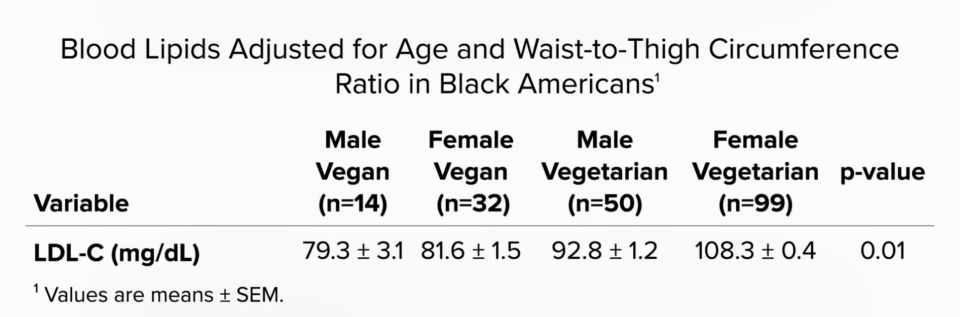
What happens when vegetarians are compared with vegans? The study’s title gives it away: “Cardiovascular Disease Risk Factors Are Lower in African-American Vegans Compared to Lacto-Ovo-Vegetarians.” This is something we’ve known about when Caucasian vegans have been compared to vegetarians. However, it was not known whether African American vegans had a more favorable cholesterol profile until this study. The results showed significantly lower LDL cholesterol in vegans. Now, of course, the vegans were also significantly slimmer, with an average weight in the normal range, compared to the overweight vegetarians. But even after taking that into account, those eating more plant-based had significantly lower cholesterol, as you can see below and at 7:11 in my video.
So, plant-based diets have tremendous potential to promote health among Black people in the United States. In fact, they may have an even greater benefit. For example, African Americans have an excess burden of chronic kidney disease, not only because they have more high blood pressure and diabetes, but also due to genetic factors. Between 8% and 12% of African Americans are carriers of the sickle cell trait, which places them at significantly higher risk of kidney disease. While Black people represent a relatively small fraction of the U.S. population, they account for more than a third of all patients on dialysis due to chronic kidney disease. And that’s where plant-based diets can come in, shown to protect against both the development and progression of chronic kidney disease.
Three-quarters of Black people are lactose-intolerant, too, so they would stand to benefit even more from eating a plant-based diet. “It is unacceptable that for decades, the American healthcare system has failed African Americans and other minority communities in both primary and secondary [cardiovascular disease] prevention,” but that just makes it all the more important for them to take the reins of their own health destiny.
Doctor’s Note
Food and tobacco aren’t the only products with marketing targeted at Black Americans. I previously covered the dangers of Johnson & Johnson’s talcum powder in Talcum Powder and Fibroids.
For more information on this topic, check out this webinar hosted by the Plantrician Project: https://plantricianproject.org/global-health-disparities-a-dialogue.

How To Get Stronger As You Age
“It’s not the years, honey, it’s the mileage.” – Indiana Jones
Like Indy, you’ve lived a little.
But, getting older doesn’t mean it’s time to sit on the sidelines. You don’t have to grow weaker and give up what you love. No matter how many miles are on the odometer, you can get older and stronger.
And this strength can impact your healthy lifespan in powerful ways. As we’ll show you below, getting stronger is associated with better aging and mortality, stronger bones and heart, and improved quality of life.
The best news? It’s never too late to add strength and experience the benefits of exercise. But if you want to stay fit (get in even better shape) as you age, you need to start thinking about your training differently.
Aging and Body Changes: What To Expect
The reality is that growing older brings the possibility of age-related changes. Left unchecked, they can alter your quality of life and even contribute to a shortened lifespan.
Heart disease is the number one killer of men and women in the United States. And according to the National Institute on Aging, older adults (people 65+) are at higher risk.
Why does this happen? As we age, fatty deposits can build up in the walls of our arteries. Over time, these deposits (called plaque) can harden and slowly narrow the arteries. This process, called arteriosclerosis, reduces blood flow and oxygen to the heart, leading to an increased chance of a heart attack.
Age-related changes happen in your skeletal system as well. Bone is a living tissue. Although changes might not occur as rapidly as they do elsewhere in the body, bone tissue is broken down by the body and replaced.
At around age 50, our body starts breaking down more bone tissue than it replaces. This process, called osteoporosis, weakens your bones and can lead to increased chances of fractures or falls.
Do you know what doesn’t change all that much as you age? Your metabolism. New research published in Science showed that when you account for differences in body size, your metabolism does not change between the ages of 20 and 60.
(Let that sink in.)
For years (maybe forever?), the assumption was that our metabolism slows down as we age. But, the ground-breaking study, which combined the work of more than 80 scientists, 6,500 participants (aged 8 days to 95 years old), and the gold standard methods of testing metabolism, shook the foundations of weight loss science.
Some rules still hold. Despite the common belief that lean people have faster metabolisms, the heavier you are, the more calories you burn. But, once you account for the differences in size, metabolism doesn’t change as much as we thought, and that applies to men and women.
After age 60, metabolism does start to decrease about 1 percent per year. Maybe not surprisingly, this appears to be correlated with a reduction in activity. So, the more active you stay as you age, the better.
Maintaining Mobility: The Best Way To Stay Injury Free
If you can’t move your joints freely through their range of motion (and control it), your chance of injury or dangerous falls increases.
If you’re injured, it’s hard to do regular exercise. And if you can’t exercise, that’s when muscle loss begins. Why does this matter? Muscle loss is strongly correlated with a lower (or shorter) lifespan.
Avoiding injury also plays an indirect role in weight loss. Regular physical activity outside the gym (called NEAT) can help maintain your body weight in a healthy range. Move less during the day, and the pounds could sneak up on you like the decades.
So, mobility is essential to a higher quality of life and a longer life.
Unlike strength training (which we’ll explore more below), there’s an inverse relationship between mobility and aging. You likely need to invest more weekly time to maintain mobility as you age.
How much? Strength Coach Mike Boyle once suggested that you should base your mobility sessions per week on every decade you’ve lived. If you just turned 50, that would mean mobility work five times a week.
That doesn’t mean you need to spend an hour a day stretching. After all, getting older doesn’t mean you have fewer time constraints on your day. For most people, 10-15 minutes a day is enough.
Not sure where to start? Try extending your warm-up before strength training sessions. By piggybacking on an existing habit (your workout), you’re more likely to make mobility a habit.
For most of our clients, I suggest a 4:1 work-to-mobility ratio. So, if your workout takes 40 minutes, you should start with 10 minutes of mobility and flexibility work.
You could also pair mobility with cardio on rest days. Before you head out on a walk (you are walking every day, right?), do 6 reps on each side of a move like the Squat Strider Kick-Through Flow. You’ll loosen up your entire body and elevate your heart rate.
Strength Training: What Should Change And What Should Stay The Same With Age
Your workout needs to shift as you age. It was fun while it lasted, but the days of maxing your bench press or squat and training heavy every day are likely gone. Your goal now is training for longevity.
What do I mean by longevity? You lose a few things as you age – and I’m not talking about your memory.
Muscle loss can begin as early as your 30s if you’re sedentary and will continue yearly at a rate of 1-2% per year. As life expectancy increases, this can lead to a severe amount of muscle lost in your 60s and beyond.
Over the decades, you’ll also lose what we call power, or the ability to move quickly. Think of things like jumping or throwing a medicine ball.
The best way to fight this loss of muscle and power? Lifting weights and safe plyometric training. When combined with regular physical activity, there’s no better way to keep you moving well throughout your entire life.
So, how should your program change? If you’re 55+, it’s time to embrace bodybuilding. In other words, your goal is now to build lean muscle mass with your workouts. We call this “hypertrophy” training. And yes, you can add muscle at any age.
It’s not that strength isn’t essential, and getting older doesn’t mean you have to get weaker. A new study out of Norway suggests you can continue getting stronger well into your 70s by lifting weights. And those results applied to both men and women.
But low reps and heavy weight beats you up, and it also increases your chance of injury. As I often tell my clients, the risk-reward ratio is no longer in your favor.
The solution? Shift your definition of strength.
Research suggests higher volumes (sets x reps) are better for hypertrophy in aging adults. When training for hypertrophy, the goal is to add more sets and reps to your workout.
Here’s what most people miss – if you’re able to add weight each week and do the same amount of reps, you’re building muscle and getting stronger as you age.
Your Age-Proof Training Plan
You’ll likely feel best – and make the most progress – by training hard 3 times per week. As we age, our ability to work hard in the gym doesn’t diminish nearly as much as our ability to recover from those sessions.
So, for most people, 3 full-body workouts each week. Keep these workouts simple. Choose an upper-body pull, upper-body push, squat (or single-leg movement), hinge, and carry. Do 2-3 challenging sets of 8-12 reps.
Finish each workout with 1 or 2 of your favorite isolation movements. If you’re 55+, I’d argue you need to do more isolation work. Remember, we’re fighting to hold onto as much lean muscle mass as possible, and isolation moves can help you do that. Plus, they’re easier on your joints.
That’s right. I’ve given you the green light to do more curls, lateral raises, and tricep press downs. You’re welcome.
We hammered this point home earlier, but it’s worth mentioning again: Start each workout with quick mobility work. Mobility isn’t a one-off thing; it’s an ongoing process, a daily habit.
Remember that loss of power we discussed earlier? After you warm up, do 1-2 power movements to keep this at bay. Things like low box jumps, med ball throw variations, or even landmine clean to presses work well.
Finally, Add LISS (low-intensity steady state) cardio 1-2x a week for 20-40 minutes, plus stay as active as possible during the day. The best choice? Long walks.
What To Be Cautious Of
Do you remember LifeAlert commercials? If you’ve seen them, you’ll know they’re famous for one line (and quality acting): “I’ve fallen, and I can’t get up.”
While you might laugh at the overacting in the commercials, the risk of falls as you age is no joke. According to the CDC, falls are the leading cause of injury and death in people aged 65+. Not heart disease or cancer. Falling.
The best way to avoid falling? We discussed the basics: strength training (don’t ignore single-leg movements), power development, and a daily mobility habit. It’s also essential to learn how to fall safely.
Joint pain can be another reality of getting older. While your training can cause this, it’s often due to a lack of movement. Getting stronger with smart training as you age will help you avoid age-related joint pain.
That said, this isn’t the Marines. Pain isn’t weakness leaving the body. If something doesn’t feel right, don’t push through it. Try modifying the movements or get coaching to refine your technique.
Finally, you’ll also want to consult your doctor before starting any new exercise program. If you experience shortness of breath or chest pain, stop exercising immediately and seek medical attention.
A Workout For All Ages
The goal here is simple: build muscle in a joint-friendly way. We’ll do that by training your entire body three times a week.
Outside of the final group of exercises each day (where we do some “pump” type training), the goal is general fatigue instead of local fatigue. In other words, unless you’re doing curls, no single body part will ever feel like it’s “done.” This helps keep the technique sharp and reduces the chance of injury.
Use this template as inspiration. While you can follow the workouts as written, feel free to plug in movements you’re more comfortable with. As long as you’ve got the foundation of the recipe, you can play around with ingredients.
Warm Up:
Leg Lowering 8ea side
Split Quadruped Adductor Mob 8ea side
Walkout Strider + Reach 3ea side
Walking Knee to Chest 10 yards
Day 1
A1. Box Jump (low box) 2 x 5 reps
A2. Med Ball Chest Pass 2 x 10 reps
B1. Goblet Squat 3 x 8-10 reps
B2. Tall Kneeling Chop 3 x 8-10 reps
C1. Prone Leg Curl Machine 3 x 10-12
C2. Resistance Band Anti-Rotation Press 3 x 10 ea
C3. Lat Pulldown 3 x 6-8 reps
D1. Single Arm Dumbbell Row R Arm 3×6-8 reps
D2. Pushup 3×8-12 reps
D3. Single Arm Dumbbell Row L Arm 3×6-8 reps
D4: Rack Pec Stretch 3×3:5 holds ea arm
Day 2
A1. Hinge Cable Pulldown 2 x 10 reps
A2. Glute Bridge 2 x 15 reps
B1. Deadlift 3 x 6 @ 75% effort
B2. Bear Crawl 3 x 5 yards
C1. Reverse Lunge 3 x 8-10 reps
C2. Dumbbell Bench Press 3 x 8-10 reps
C3. Plank Hold
Set a timer for 8 minutes. For both of the exercises below, select a weight you can do for 8 reps. Now, here’s the key – you’re only going to do 5 controlled reps each set. Complete each exercise back and forth (only taking rest when you need to) for the full 8 minutes.
D1. Biceps Curls
D2. Triceps Extension
Day 3
A1. Resistance Band Monster Walk 2 x 10ea
A2. Shoulder Tap 2 x 8ea
B1. Low Cable Split Squat 3 x 8-10 ea
B2. Bench Press 3 x 6 @ 75% effort
C1. Sumo Lateral Squat 3 x 8ea
C2. Straight Leg Situp 3 x 8 reps
C3. Offset Pushups 3 x 5ea
Perform the following 3 exercises as a circuit, which means completing one exercise after another. Try to keep moving the entire 40 seconds. Then, rest for 20 seconds as you move on to the next exercise. After you complete all 3 exercises, rest 1 minute and then repeat for a second round.
D1. TRX Face Pull 40 seconds (20 seconds rest)
D2. Dumbbell Lateral Raise 40 seconds (20 seconds rest)
D3. TRX Hip Thrust 40 seconds (20 seconds rest)
B.J. holds a B.S. in Health and Human Performance and multiple certifications, including Precision Nutrition Level 1 and BioForce Certified Conditioning Coach. Over his 14-year coaching career, he’s been fortunate enough to coach a wide range of clients. From online clients looking to get in great shape to CEO Nate Checketts (Rhone) and CEO Marcelo Claure (Softbank), and professional skateboarder Sean Malto. Before beginning his training career, he was a sports science lab research assistant.

What is Sweat? The Truth About Sweaty Workouts
What most people already know is that sweating is our body’s way of cooling itself down during a workout or intense physical activity, or even a super stressful situation. So obviously, sweating while exercising is very normal.
But for some, sweating can feel excessive and can lead to not-so-pleasant odors or stains on clothes. So let’s learn more about what sweat actually is and answer common questions about sweaty workouts.
Table of Contents:
What is sweat?
Like everything that has to do with our bodies, there’s a chemical makeup of sweat – it is made up mainly of water (H₂0) and salt (Na+), and contains sodium, potassium, and chloride ions.(1)
Sweat is directly related to changes to the electrolyte balance in the body.(2) This is why adequate hydration is extremely important, so your body has the means to cool itself down.
If you are dehydrated going into a workout — which means you did not drink enough beforehand — your body will not be able to cool itself down or regulate its core temperature properly. The same goes for replenishing lost fluid after an intense workout.
If you do not compensate for your sweat loss with proper fluid intake, especially for those who are engaging in intense physical activity, a hypohydration state can occur as well as an overall increase in core body temperature.(3)
Remember, sweat is water and salt, so you’ll want to properly hydrate – of course, with water as well as homemade electrolyte drinks or mindfully incorporating a bit of salt into your meals.
Where does sweat come from?
Sweat actually comes from two different types of sweat glands in the body.
- The eccrine glands are the ones responsible for cooling down the body when our body temperature rises. They are found all over the body and open directly on the surface of the skin, which then allows the sweat to evaporate, causing this cooling effect.
- Apocrine sweat glands, on the other hand, are found under the arms and in the groin area — areas where there are generally more concentrated hair follicles. These sweat glands are also triggered by increased body temperature but are mostly activated during times of stress, anxiety, or hormonal fluctuations. This sweat is a bit milkier and mixes with the bacteria on the skin, which creates the not-so-pleasant body odor.

Why am I sweating so much?
The amount that you sweat also depends on your weight, sex, fitness level, age, where you live (climate), and even your genetics. Scientifically speaking, sweating is a complex physiological response to activity, temperature, plasma volume, and sweat rate.(3)
Sweating a lot during exercise
Sweating during physical activity is completely normal, but the amount you sweat can depend on your fitness levels and overall physique. An overweight person is going to sweat more easily because the amount of energy needed to execute a particular activity is going to be higher.
Additionally, a fitter person who works out regularly will begin to sweat faster than a not-so-fit person because the body is smart and is already prepared to sweat to cool itself down while training.
Did you know
One study found that a person who is perspiring from running has a higher level of electrolytes in their sweat than a person who is inactively sweating in a sauna. This means that even the chemical makeup of the sweat that is produced depends on the cause for the perspiration.(4)
Sweating in the summer
You may have noticed that you break a sweat faster and sweat more when you exercise in the summer. This is completely normal — your body has to adjust to the heat and cool itself down more. So, in this case, more sweat is a positive reaction from your body.
Sweating in the sauna
Another common place many people find themselves sweating a lot is in the sauna. A trip to the sauna is usually intended to get sweaty and burn calories while relaxing. But do you actually burn calories from sweating? We will answer this, and many other frequently asked questions in our Sweat 101 section below.
How to prepare for a sweaty workout:
1. Drink Enough
Most people walk around chronically dehydrated! Be sure that you’re drinking enough water every day. This calculator will help you find out how much you should be drinking:
And by the way, you should be drinking water even when you are not thirsty! The feeling of thirst is actually your body crying for help, not an initial signal. If you’re not sure whether you’re drinking enough, see if any of these 9 signs of dehydration apply to you.
2. Remove cosmetics beforehand
If you want to really sweat, then wash off any makeup or lotions you may have put on throughout the day. Why? These can block the pores and prevent your body from cooling itself down.
Blocked pores (especially on the face) during exercise can also increase blemishes. Wash it off quickly beforehand if you have time.
3. Wear the right workout clothes
The most important thing to think about when choosing workout clothes is breathability. You’ll be happier training in moisture-wicking and breathable materials.
Looking for an extra sweaty workout? Try this intense Wakanda Forever Workout on the adidas Training app.

Sweat 101: The questions everyone asks
1. Why do I sweat so much from my face and head when I exercise?
Sweating from the face and head is quite common and is simply a result of overstimulated eccrine glands. There are factors outside of exercise that can also result in a sweaty face and head, including
- certain medications
- anxiety
- spicy foods
- hyperthyroidism
- menopause
- substance abuse
2. How much should I sweat when I work out?
This is the golden question without a golden answer. Because simply put, nobody is the same so while one person may sweat a lot during an intense workout, another might not at all during the same workout.
As we stated earlier, hydration also plays a role in how much we sweat, as well as fitness level, age, climate, skin, gender, etc.
If you are concerned that you’re not sweating enough during exercise, try a heart-rate monitor to better gauge your fitness level and intensity of the workout.
3. Does sweating during exercise burn calories?
Exercise burns calories, and sweating can be a result of exercising as it helps to cool the body down. But like we said before, not everyone sweats during exercise, while some sweat excessively during exercise. So the amount of sweat doesn’t always align with the intensity of the workout.
However, sitting in the sauna can burn calories as the high temperatures cause your heart rate to increase. But if you’re looking to lose weight, this is not a very effective way as you will likely only lose water weight from sweating and put it back on when you rehydrate.
Remember, activity is what burns calories. No matter how much or how little you sweat.
4. Is it unhealthy not to sweat during exercise?
As we’ve said before, everyone is different – from genetic makeup to how many sweat glands you have, no one is the same. So if you don’t sweat as much as someone else, that’s not to say there is a problem. It might just be that you have fewer sweat glands.
But what is unhealthy is if your body is unable to cool itself down, leading to heatstroke, heat exhaustion, or heat cramps. If your body is not able to cool down internally, you may have a medical condition like anhidrosis or hypohidrosis, and in that case, you need to seek medical advice.
Some final words
So now you know that the amount you sweat doesn’t only depend on the intensity of your workout but also on other factors. If you provide the right conditions and hydration for your body to sweat in a healthy way, it can cool down efficiently so that there’s nothing stopping you from embracing your sweaty workouts.

***
-
 HEALTH & WELLNESS8 years ago
Acidophilus: A Probiotic Bacterium
-

 herbs3 years ago
The Ultimate Guide to Ashwagandha Extract: Stress Relief and Optimal Health Unveiled
-
 HEALTH & WELLNESS7 years ago
Herbs and Essential Oils to Fight Coronavirus
-
 TRAINING & FITNESS8 years ago
6 Ways to Decrease your Shoulder Pain!
-
 Fitness8 years ago
“No Pain, No Gain” True or Just a Fitness Myth
-
 HEALTH & WELLNESS8 years ago
Why Muscles Get Sore
-
 DIET & NUTRITION8 years ago
Low Carb Diet: Carbohydrates Influence on Testosterone
-
 TRAINING & FITNESS7 years ago
Training to Failure Every Set… Pathway to New Muscle or Pathway to Overtraining?