

Supplements
Collagen, curcumin and low-cost omega-3 in new scientific findings round-up

A multi-ingredient joint health formula improved exercise tolerance in individuals with knee pain, according to a 12-week pilot study published in Nutrients.
Containing collagen, curcumin and hydrolyzed bone powder, the formula helped endurance-trained adults perform more load-bearing repetitions.
The study from China randomized 60 endurance-trained adults with activity-related knee discomfort into three groups, receiving either undenatured type II collagen, curcumin phytosome and enzymatically hydrolyzed bone powder or glucosamine hydrochloride plus chondroitin sulfate or placebo.

Researchers from Australia’s Southern Cross University are seeking to reduce the cost of omega-3 supplement production through an ongoing study.
Backed by an 18-month grant from the Gates Foundation, the study uses precision fermentation to produce fish-free omega-3 from marine microorganisms called thraustochytrids.
Led by Professor Dirk Erler, the research team is investigating how to grow thraustochytrids at a lower cost, including using agricultural and food-processing by-products to provide the sugars needed for growth.

Heat-killed Lactiplantibacillus plantarum L-137 (HK L-137) improved markers of inflammation and gut barrier function in menopausal women.
It was also associated with beneficial changes in sleep and body mass index in participants with high stress levels.
House Wellness Foods Corporation, which funded the study, wrote in Nutrients that the postbiotic could be beneficial in menopausal women with high stress levels through gut barrier-related host responses.

Capsifen capsaicin supplementation may significantly improve total cognitive function and neurovascular coupling, while simultaneously reducing waist-to-hip metrics in overweight older adults.
Researchers at Australia’s University of Southern Queensland noted that the findings provided preliminary evidence that “chronic capsaicin supplementation may improve cognition and neurovascular coupling in humans”.
The research used India-based Akay Bioactives’ capsaicin ingredient, Capsifen.

A study from Japan reported inconclusive benefits for cardiopulmonary and cognitive function in healthy individuals who took NMN and formulations containing NMN and other actives such as ginsenosides, berberine, PQQ, CoQ10, and spermidine for 42 days.
Specifically, the study found no statistically significant improvements in cardiopulmonary or cognitive function outcomes—the study’s primary objectives—between the placebo and NMN groups.
Although the group taking NMN formulated with seven other actives showed favorable improvements in cognitive function compared with placebo, the findings were not statistically significant.

Continue Reading
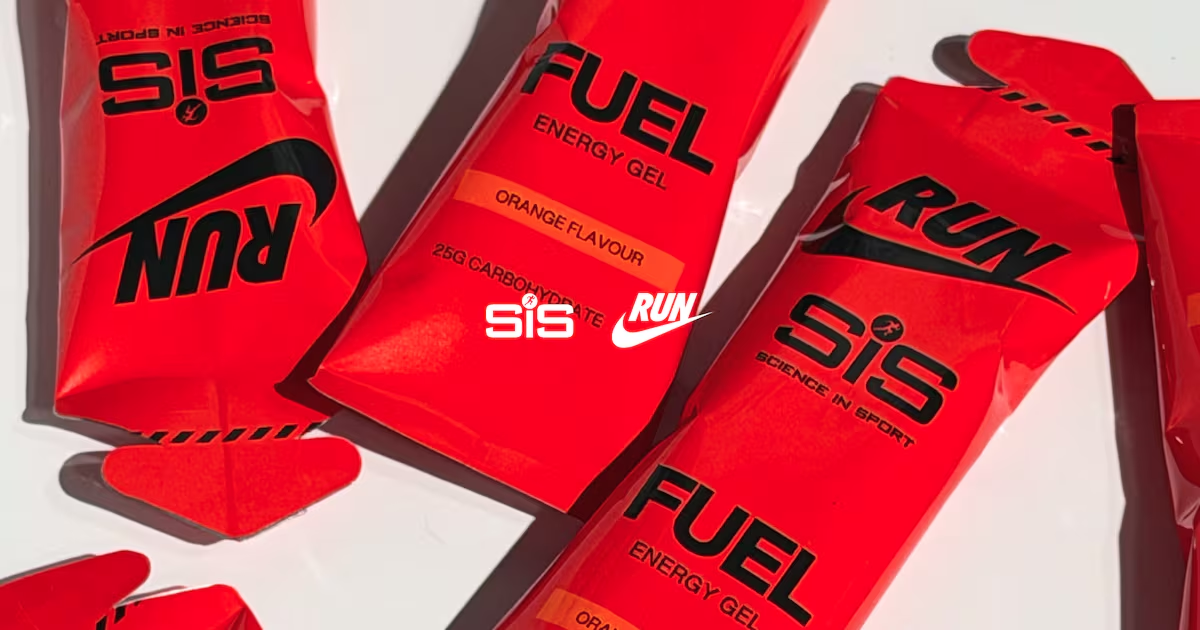
The collaboration will see the two companies introduce a co-branded performance nutrition range in spring 2027 (with further details yet to be announced), combining SiS’s formulation and manufacturing expertise with Nike’s consumer insights, brand and design capabilities.
The global sportswear brand Nike, which specializes in athletic footwear, apparel, equipment and performance innovation, sponsors thousands of elite athletes, teams, clubs and sporting organizations worldwide, using these partnerships to promote its products, support sporting performance and strengthen its global brand presence.
SiS, with an extensive portfolio covering most of the core performance nutrition categories, has a long history of working with elite sporting talent, including Olympic champions Adam Peaty, Sir Chris Hoy and Alistair Brownlee, cyclist Mark Cavendish, runner Eilish McColgan, heptathlete Katarina Johnson-Thompson and marathon world champion Gotytom Gebreslase.
Daniel Lampard, chief commercial and operating officer at SiS, told NutraIngredients that the multi-year partnership is a landmark moment for the business, providing an opportunity to accelerate its commercial growth, expand its global reach and make performance nutrition more accessible, while helping runners better understand and incorporate fueling into their performance journeys.
“Expanding our partnership with Nike is a tremendous opportunity to bring our science, product development expertise and ambition to more runners,” Lampard said. “Ultimately, we want to leave a lasting impact on the running community and help shape the future of performance nutrition.”

Making performance nutrition accessible
Lampard noted that through the partnership, SiS aims to break down the perception that performance nutrition is reserved for elite athletes and demonstrate its relevance to runners of all abilities.
“Nutrition remains one of the most underutilized performance advantages available to runners and there is a significant opportunity to improve understanding of how effective fueling can support training and race-day performance,” he said.
“By making the science more accessible and helping runners incorporate fueling into everyday routines, we believe we can drive greater adoption of performance nutrition and unlock meaningful, sustainable category growth.”
He added that SiS believes nutrition should form a fundamental part of the running experience, alongside choosing the right footwear and following a structured training program.
“While runners are increasingly conscious of the factors that influence their performance, there is still considerable opportunity to improve their understanding of effective fueling,” Lampard said. “By making proven fueling principles more accessible, we want to encourage a holistic approach to athletic performance.”
The female athlete
The partnership follows SiS’s role as the Performance Fuel and Hydration Partner for the 2026 Nike After Dark Tour, the global women’s running series designed to challenge barriers to female participation in sport, particularly the safety concerns and lack of confidence that can prevent women from running after dark.
“Historically, sports performance research has been heavily weighted towards male athletes, leaving significant gaps in our understanding of female physiology and its implications for fueling and hydration,” Lampard said.
The company is also investing in closing the knowledge gap around female athlete nutrition through research into elite female marathon runners and insights from athletes such as McColgan, shared through its Elite Performance Advisory Panel.
“We believe the next frontier in endurance performance won’t come from simply applying existing knowledge to female athletes but from developing a deeper understanding of their specific physiological needs and translating that science into practical fueling recommendations.”


Researchers in Italy and Pakistan compared nearly 300 participants who were randomly allocated to take the supplement for 14 days or to follow a diet without supplementation.
“Adding α- and β-galactosidases plus an Aspergillus niger-derived prolyl endopeptidase to a low-FODMAP diet provided additional clinical benefit in adults with Rome IV IBS, particularly for bloating, flatulence, abdominal discomfort, and abdominal pain,” they wrote in Frontiers in Nutrition.
“Rather than replacing dietary intervention, enzyme supplementation may enhance its clinical effectiveness by reducing the luminal burden of selected fermentable substrates and supporting a less restrictive and more personalized approach.”
The FODMAP diet for IBS management
The low FODMAP (Fermentable Oligosaccharides, Disaccharides, Monosaccharides, and Polyols) diet is widely recognized for managing irritable bowel syndrome (IBS) symptoms and, according to a 2025 systematic review and meta-analysis, has the strongest evidence.
The low FODMAP diet restricts short-chain carbohydrates that are poorly absorbed in the small intestine. The unabsorbed molecules exert an osmotic effect, drawing water into the intestine and potentially causing loose stools in people with IBS. Once the carbohydrates reach the colon, resident bacteria ferment them, contributing to symptoms such as bloating, pain, and gas. Therefore, restricting foods that contain these types of carbohydrates has been shown to reduce IBS symptoms.
However, the FODMAP diet is not recommended as a long-term or permanent dietary adjustment. It can be challenging to adhere to, which can lead to nutrient shortfalls and alterations in the gut microbiota.
Enzymes can help reduce intestinal exposure to poorly digested carbohydrates. The enzyme α-galactosidase can help to break down galacto-oligosaccharides, and β-galactosidase breaks down lactose, potentially reducing the amount of fermentable carbohydrates reaching the colon. Proline-rich gluten peptides have previously been shown to break down gluten under gastric conditions. Therefore, the current researchers evaluated whether supplementation with these enzymes, in addition to a low-FODMAP diet, could be supportive for IBS.
The study
The prospective, multicenter, randomized controlled study involved 292 adults diagnosed with Rome IV IBS. They were allocated to a low-FODMAP diet alone or the same diet plus enzyme supplementation for 14 days.
The supplement used was Galactol, a commercially available gastroprotected multi-enzyme dietary supplement marketed by PharmExtracta S.p.A., Italy. The researchers assessed the participants’ symptoms at the start and end of the study.
The findings showed that although both groups improved significantly over time, the symptom reductions were greater in the supplement group.
Participants who took the enzyme supplement alongside the low-FODMAP diet reported greater reductions in bloating (40.38% vs 26.51%), flatulence (44.67% vs 28.10%), abdominal discomfort (45.47% vs 28.60%) and abdominal pain (53.53% vs 32.11%) compared with those who followed the diet alone. The supplement group also experienced greater improvements in bowel movements, diarrhoea frequency and overall gastrointestinal wellbeing.
“These findings support digestive enzyme therapy as a complementary, substrate-oriented strategy in IBS dietary management,” they concluded.
They recommended further studies to evaluate the effects of enzyme supplementation over longer intervention periods and during the FODMAP reintroduction phase. They also suggested taking into account the different IBS subtypes and using more detailed symptom assessments.
Source: Front. Nutr., 23 November 2026, Sec. Clinical Nutrition
Volume 13 – 2026 | https://doi.org/10.3389/fnut.2026.1953638
“Adjunctive Galactol®, a multi-enzyme dietary supplement, in adults with irritable bowel syndrome following a low-FODMAP diet: a multicenter randomized controlled study.”
Authors: A. Bertuccioli et al.


The screening starts with taking photographs of the fingernails, tongue, lower eyelid and inner lip, followed by a five-minute questionnaire on the child’s eating habits.
Known as IronUp! Checker, the tool is accessible via a smartphone or desktop.
The tool also provides educational information on anemia, its symptoms, nutrition tips for iron intake, ways to boost iron absorption and recommends iron-fortified products from Danone. It may also recommend a follow-up with a healthcare professional for further assessment.
Designed for children aged six months to six years, Danone spent the past two years collecting data from literature reviews, screening about five million children and running clinical studies to develop the checker.
“The model was developed using clinical study data and pairing images with references of blood haemoglobin measurements. We also conducted three studies in Singapore, Africa and Thailand, and will have more coming from Indonesia and India,” said Agathe Foussat, director at digital health and OneBiome, Medical and Nutritional Science – Precision Nutrition D-Lab, Research and Innovation, Danone.
AI for IDA risk detection and more
According to the World Health Organization (WHO), two in five (40%) of children under five worldwide are affected by anemia. Iron deficiency is a key factor.
Despite its prevalence, Foussat pointed out that IDA symptoms are usually not visible in the early stages. Promoting early risk detection is thus important.
“In Danone, we have a digital health team that is working on different technologies and AI devices to make the impact of our products more visible to people,” she told NutraIngredients. “We have been doing so for around 10 years now for different product categories and health parameters.”
The web page of IronUp! Checker was launched globally today (November 26) in conjunction with the World IDA Day. The next step is a full roll-out across partners such as healthcare practitioners and clinics etc., starting with South East Asian markets including Indonesia, Singapore, Thailand, Malaysia, Laos and Cambodia in year 2027.
Developed out of Danone’s D-Lab based in Singapore, IronUp! Checker is an example of AI-powered screening tools that the company is developing.
Last year, NI reported that the lab was building screening and monitoring tools for healthy aging.
Honing the accuracy with more studies
Danone has used the IronUp! Checker to conduct observational studies in Singapore, Thailand and Africa, with more studies to come as it continues to refine its AI algorithm.
Results of the observational study conducted in Singapore and Thailand were showcased at this year’s European Society for Paediatric Gastroenterology, Hepatology and Nutrition (ESPGHAN) meeting in France.
The study collected images and videos of the lower eyelid, lower lip, tongue and nail bed, and blood samples for laboratory hemoglobin analysis from 250 children above 6 months and below 6 years old.
Findings showed that the AI algorithm developed using images and videos from all four anatomical sites — a.k.a. the combined model — was best-performing for predicting hemoglobin levels, as compared to AI algorithms developed using images and videos from only one anatomical site.
The combined model yielded a test sensitivity of 65% and specificity of 88%. The other four models were generally less sensitive, with test sensitivity between 54% and 71% and test specificity between 70% and 89%.
Danone has set a test sensitivity and specificity rate of 80%.
To sharpen the checker’s AI algorithm, Foussat said the company would conduct further studies to include data from more ethnicities.
“We are continuing to test and improve the model in more diverse populations,” she said. “Our new study in Africa, for example, has helped us a lot in looking at model development based on different populations with lower haemoglobin levels and different skin color.”
-
 HEALTH & WELLNESS8 years ago
Acidophilus: A Probiotic Bacterium
-

 herbs3 years ago
The Ultimate Guide to Ashwagandha Extract: Stress Relief and Optimal Health Unveiled
-
 HEALTH & WELLNESS7 years ago
Herbs and Essential Oils to Fight Coronavirus
-
 TRAINING & FITNESS8 years ago
6 Ways to Decrease your Shoulder Pain!
-
 Fitness8 years ago
“No Pain, No Gain” True or Just a Fitness Myth
-
 HEALTH & WELLNESS8 years ago
Why Muscles Get Sore
-
 DIET & NUTRITION8 years ago
Low Carb Diet: Carbohydrates Influence on Testosterone
-
 TRAINING & FITNESS7 years ago
Training to Failure Every Set… Pathway to New Muscle or Pathway to Overtraining?