

Supplements
Hair micronutrients may predict ulcerative colitis disease activity



“The results suggest that magnesium, iron, and selenium hair levels warrant further investigation as potential biomarkers for disease monitoring,” the researchers wrote in Frontiers in Nutrition.
Ulcerative colitis (UC) is a chronic, relapsing inflammatory bowel disorder with complex root causes including genetics, immune dysfunction, and environmental factors. Doctors treat the condition by reducing inflammation, but there is growing interest in the role of micronutrients in managing disease activity.
Malnutrition and micronutrient deficiency are common in UC patients, affecting disease progression and clinical outcomes. Assessments using blood samples are part of routine clinical care but may not reflect chronic tissue depletion; “Serum levels are subject to several limitations since they can be influenced by recent dietary intake, acute-phase responses, or homeostasis regulation,” the researchers wrote.
Although not recognized in current clinical guidelines, the researchers note that “hair mineral analysis emerges as a promising complementary tool to standard assessment, offering greater stability and reduced susceptibility to short-term fluctuations”.
The current study also notes that “The European Society for Clinical Nutrition and Metabolism (ESPEN) and European Crohn’s and Colitis Organisation (ECCO) guidelines recommend individualized correction of documented deficiencies, with particular attention to iron, vitamin B12, folate, vitamin D, calcium, magnesium, and zinc, particularly in clinically vulnerable subgroups.”
The researchers recommended expanding the nutritional scope in future guidelines to incorporate other macro- and trace elements that have demonstrated potential associations with disease activity in the emerging literature.
“By integrating nutritional biomarkers with established clinical and laboratory indices, clinicians may achieve more precise risk stratification and individualized management,” they wrote.
The study
The study involved 25 adult Romanian participants with UC. The researchers collected blood and hair samples at the start of the study, and the participants’ disease activity was measured using the Mayo score at baseline and at 6 months.
The Mayo score is a commonly used tool to measure disease activity in ulcerative colitis trials. The 12-point score ranges from mildly active disease at the lower end to severely active disease at the higher end.
The micronutrient concentrations in the hair samples were measured using Scanning Electron Microscopy (SEM) and Energy Dispersive X-ray Spectroscopy (EDX).
The researchers compared two multiple linear regression models; the first using only blood sample data, and the second incorporating micronutrient hair concentrations.
They found that both models captured the variance in disease activity, but the model incorporating hair analysis significantly improved prediction of activity at 6 months.
“Baseline Mayo score, lymphocyte count, CRP, and albumin, were consistent predictors, while hair magnesium, iron, and selenium hair levels were found to be associated with disease activity and qualify as candidates for potential predictors,” they wrote.
Acknowledging the small sample size and methodological limitations such as not accounting for dietary micronutrient intake, the researchers recommended larger future studies with more comprehensive assessments to validate their findings.
Source: Front. Nutr., https://doi.org/10.3389/fnut.2026.1956694, “Building evidence on the association between hair micronutrient concentrations and disease activity in ulcerative colitis through hair trace element profiling: an exploratory analysis.” Authors: G-E Gilca-Blanariu et al.

Continue Reading
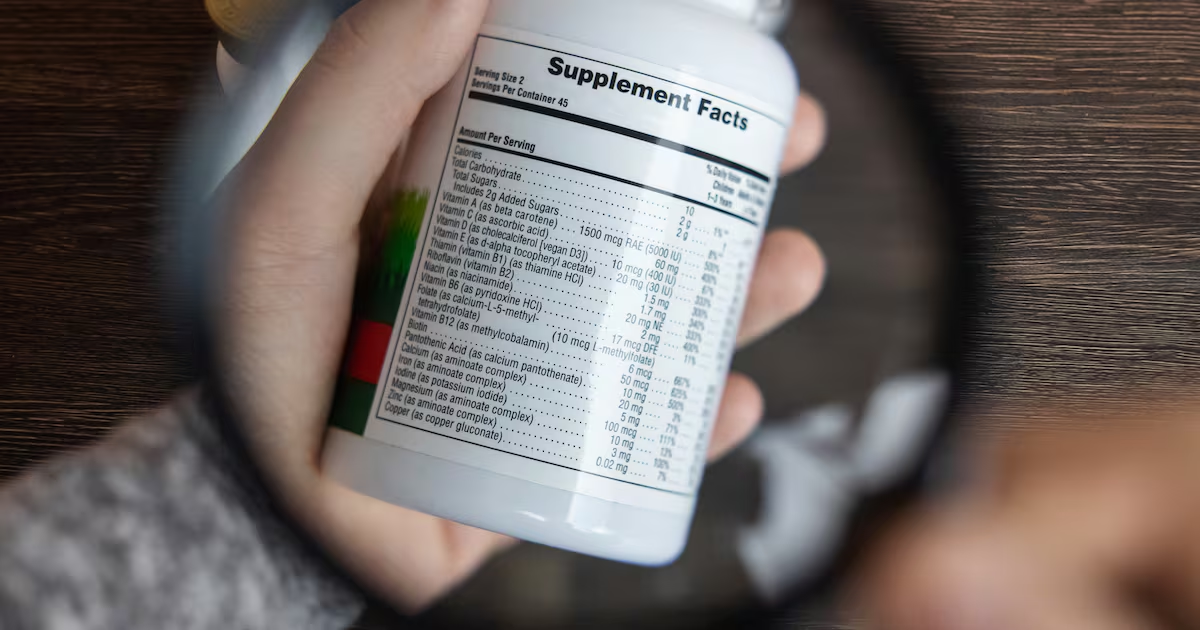

As supplement companies review their labeling practices heading into 2027, California’s exemption for dietary supplements under its standardized food date-labeling requirements offers regulatory certainty, but also raises questions about which products qualify.
Assembly Bill (AB) 2779, signed into law in September, exempts dietary supplements from the requirements established under AB 660, which mandates standardized terminology for quality and safety dates on covered food products manufactured on or after July 1, 2026.
The exemption recognizes that supplement expiration dates are generally tied to ingredient potency and stability, rather than the quality and safety considerations associated with conventional foods.
While the carve-out could help supplement manufacturers avoid California-specific packaging changes, products that blur the line between conventional foods and dietary supplements may still face compliance challenges and potential litigation exposure.
NutraIngredients spoke with Laura Bentele, partner and leader of the Agribusiness and Food team at national law firm Armstrong Teasdale, about what the exemption means for manufacturers, brands and retailers, and the regulatory risks companies should be watching in the year ahead.
NutraIngredients (NI): Can you walk us through what California’s AB 2779 requires and, specifically, what the dietary supplement exemption means in practice?
Laura Bentele (LB): AB 2779 does not create new obligations necessarily. It mostly restates a companion bill and carves out dietary supplements.
Under the companion bill AB 660, any manufacturer/processor/retailer that puts a quality or safety date on a food made on or after July 1, 2026 must use one of the standard terms. The law also makes it illegal to sell a noncompliant item in California.
It bans the phrase “sell by,” except for coded dates that consumers cannot easily read. If you’re curious why supplements were exempted, it was based around industry positions that those products have different shelf life and overall product stability profiles.
NI: Why were dietary supplements carved out of California’s standardized date-labeling requirements? Was there something about the supplement regulatory framework that made applying these provisions unnecessary or problematic?
LB: On a basic level, supplement dates answer a different question than dates used for food products. For the latter, there are issues of quality and food safety.
Dates for supplements, however, are generally geared to potency considerations (and that’s what the legislative record appears to focus on here). So, the product categories have different stability issues/shelf lives as compared to ordinary food products.
I don’t think it is per se an issue of being unnecessary or problematic. It’s just a different set of priorities.
NI: What is the biggest practical takeaway from this exemption for dietary supplement manufacturers, brands and retailers?
LB: Biggest takeaway is that supplement manufacturers have a lot more certainty without relabeling their products. They don’t have to worry about California specific labels or packaging.
Retailers may also benefit, too. However, the product has to truly qualify as a dietary supplement. Unclear whether this will push products on the periphery between a food product and supplement to make adjustments.
NI: Are there circumstances in which a product marketed by a nutrition company might not qualify for the dietary supplement exemption—for example, products that blur the line between a conventional food and a dietary supplement?
LB: Absolutely, because that type of product is increasingly common for certain brands trying to signal functional and health benefits. The California regulation adopts federal definitions, which makes clear that products represented for use as a conventional food or as a sole item of a meal or the diet is not a dietary “supplement.”
There’s also FDA guidance on distinguishing the products that would come into play (e.g. looking at a product name, recommended serving size, direction for use, etc.). FDA would also consider labeling and marketing to come to a determination re whether a product is a supplement or conventional food product.
NI: California is a significant source of labeling-related litigation for the nutrition industry. Does this exemption meaningfully reduce litigation or enforcement exposure for supplement companies, or do you see other potential risks remaining?
LB: I think for true supplements, the exemption meaningfully reduces risk. Although, it might motivate plaintiffs to argue that more products are actually conventional foods in disguise so that AB 660 can be used as another basis for a consumer claim.
I have no doubt that that angle is already being reviewed by the plaintiff’s bar.
NI: California frequently influences labeling practices nationally. Do you expect its approach to standardized food date labeling, and the treatment of supplements, to be replicated by other states?
LB: Replicated in other states insofar as manufacturers and retailers may be motivated to standardized labels nationwide to conform to California (like you see with Prop 65) if their market activity is large enough in California.
Although, other states are adopting date-labeling standardization approaches like New York and Illinois (and a few others).
NI: If you were advising a dietary supplement company selling products in California today, what, if anything, would you tell it to review in light of AB 2779?
LB: I would suggest that an audit of every product sold into California is appropriate to confirm, as a baseline, if labeling is currently compliant with federal requirements. In particular, if they are categorizing a product as a supplement, we would want to make sure it is fully in the supplement category.
This would also be a good opportunity to confirm that they have adequate data supporting the stability information serving as the foundation for their expiration/potency dates.
I would also suggest that if they have conventional foods in their portfolio that are sold into California, a closer look at those products to make sure they are compliant with the new state regulation would also be merited at the same time.
NI: Is there anything about the dietary supplement exemption that you think industry has misunderstood or that hasn’t received enough attention?
LB: I am not sure what industry currently misunderstands, but I would guard against assuming that this is a broad exemption for products in the wellness space.
Federal supplement status will govern, so it is important not to misconstrue the scope of the exemption when evaluating exposure here.
NI: Looking beyond this legislation, what California labeling or consumer-protection developments should supplement companies have on their radar over the next 12 to 18 months?
LB: There is a new weight-management/sports-nutrition products regulation (AB 2030) that is worth a look. California is seeking to impose age restrictions and verification requirements for products geared toward weight loss and muscle building (especially if the products appear to target consumers under 18).
Claims related to weight, strength, metabolism could be a trigger for review. Might even be some ingredients like green tea extract that could get heightened attention due to their deep connection with weight and metabolism management.
There’s a New York law that is similar, but California goes further because there does not appear to be a carve-out for protein-focused products. Which, of course, is a huge area of focus for any company operating in the health/supplements space right now.
There are some things on the federal level that point to preemption issues in this space, but they are a ways off.


Researchers from UK institutions and universities including Teagasc Food Research Centre, Ireland, Nottingham Trent University and Rotherham United Football Club, conducted a study in which they followed 11 male professional footballers for six months.
Eight of the players opted to take the The Turmeric Co.’s Raw Turmeric Original shots twice daily while three players acted as a control group.
The researchers analyzed gut microbiota changes through shotgun metagenomic profiling of fecal samples at baseline, week 2, and at the end of intervention.
Findings published in Performance Nutrition, indicated an increase in Blautia, a bacteria previously linked to anti-inflammatory effects, and a decrease in Alistipes, a bacteria linked with inflammation, in those consuming the shots compared with the control group.
“The gut microbiome may influence metabolism, immune function and inflammation, which makes it an important area of investigation in nutrition research,” said Dr Loris Juett, lead research scientist at University of Leicester and The Turmeric Co. and study co-author. “The changes we observed in Blautia and Alistipes are interesting because previous research has linked these with metabolism and inflammation.
“This gives us specific questions to investigate next: whether these patterns are replicated in larger studies and whether they relate to measurable health effects.”
Dr Juett said The Turmeric Co. will conduct a follow-up study with a larger sample size, ideally combining gut microbiome analysis with markers of metabolism and inflammation, as well as subjective measures such as gut symptoms and muscle soreness.
Turmeric and the gut microbiome
The gut microbiome plays a role in digestion, metabolism and immune function. Curcumin, a naturally occurring compound in turmeric, is known to be poorly absorbed into the bloodstream when consumed in the form of food and drink. This has prompted the researchers in the current study to investigate whether interactions within the gut could help explain some of its potential biological effects.
The resulting data indicated increases in Blautia wexlerae and Blautia obeum in the turmeric beverage group, and decreases in Alistipes putredinis and Alistipes onderdonkii, compared with the control group.
The overall findings indicated modest microbiome changes, rather than large changes across the whole microbial community.
Research informing the wider business
The Turmeric Co. was founded in 2018 by former Wales international Thomas ‘Hal’ Robson-Kanu and his father, following his own search for nutritional support to inflammation during his football career.
To date, The Turmeric Co has conducted four of its own peer-reviewed and published research indicating the shots improve markers of recovery, reduce post-exercise gut damage in elite male footballers, and reduce menstrual cycle symptoms in female footballers.
Robson-Kanu told NI the brand is committed to improving the standards for scientific substantiation of finished products in the supplements industry.
“My father and I started The Turmeric Co. to share the homemade turmeric blends we developed together… As the business has grown, so has our commitment to understanding our products through research and communicating the findings clearly,” he said. “Research helps inform how we develop products, the questions we ask and the conversations we have with healthcare professionals, retail partners and customers.
“We want to build a business that people can trust over the long term, and that means continuing to investigate our products and being open about what we learn.”
Dr Juett added that the team is currently conducting a double-blind randomized controlled trial investigating the effects of The Turmeric Co. shots on the physiology and wellbeing of middle-aged and older adults as well as a study examining the bioavailability of curcumin from the shots.
Source: Performance Nutrition, https://doi.org/10.1186/s44410-026-00033, “Effects of turmeric beverage consumption on gut microbial diversity during a professional soccer season: a pilot study”. Authors: Clayton, D.J., et al

A multi-ingredient joint health formula improved exercise tolerance in individuals with knee pain, according to a 12-week pilot study published in Nutrients.
Containing collagen, curcumin and hydrolyzed bone powder, the formula helped endurance-trained adults perform more load-bearing repetitions.
The study from China randomized 60 endurance-trained adults with activity-related knee discomfort into three groups, receiving either undenatured type II collagen, curcumin phytosome and enzymatically hydrolyzed bone powder or glucosamine hydrochloride plus chondroitin sulfate or placebo.

Researchers from Australia’s Southern Cross University are seeking to reduce the cost of omega-3 supplement production through an ongoing study.
Backed by an 18-month grant from the Gates Foundation, the study uses precision fermentation to produce fish-free omega-3 from marine microorganisms called thraustochytrids.
Led by Professor Dirk Erler, the research team is investigating how to grow thraustochytrids at a lower cost, including using agricultural and food-processing by-products to provide the sugars needed for growth.

Heat-killed Lactiplantibacillus plantarum L-137 (HK L-137) improved markers of inflammation and gut barrier function in menopausal women.
It was also associated with beneficial changes in sleep and body mass index in participants with high stress levels.
House Wellness Foods Corporation, which funded the study, wrote in Nutrients that the postbiotic could be beneficial in menopausal women with high stress levels through gut barrier-related host responses.

Capsifen capsaicin supplementation may significantly improve total cognitive function and neurovascular coupling, while simultaneously reducing waist-to-hip metrics in overweight older adults.
Researchers at Australia’s University of Southern Queensland noted that the findings provided preliminary evidence that “chronic capsaicin supplementation may improve cognition and neurovascular coupling in humans”.
The research used India-based Akay Bioactives’ capsaicin ingredient, Capsifen.

A study from Japan reported inconclusive benefits for cardiopulmonary and cognitive function in healthy individuals who took NMN and formulations containing NMN and other actives such as ginsenosides, berberine, PQQ, CoQ10, and spermidine for 42 days.
Specifically, the study found no statistically significant improvements in cardiopulmonary or cognitive function outcomes—the study’s primary objectives—between the placebo and NMN groups.
Although the group taking NMN formulated with seven other actives showed favorable improvements in cognitive function compared with placebo, the findings were not statistically significant.
-
 HEALTH & WELLNESS8 years ago
Acidophilus: A Probiotic Bacterium
-

 herbs3 years ago
The Ultimate Guide to Ashwagandha Extract: Stress Relief and Optimal Health Unveiled
-
 HEALTH & WELLNESS7 years ago
Herbs and Essential Oils to Fight Coronavirus
-
 TRAINING & FITNESS8 years ago
6 Ways to Decrease your Shoulder Pain!
-
 Fitness8 years ago
“No Pain, No Gain” True or Just a Fitness Myth
-
 HEALTH & WELLNESS8 years ago
Why Muscles Get Sore
-
 DIET & NUTRITION8 years ago
Low Carb Diet: Carbohydrates Influence on Testosterone
-
 TRAINING & FITNESS7 years ago
Training to Failure Every Set… Pathway to New Muscle or Pathway to Overtraining?