
Uncategorized
Too Busy to Work Out? Try This Weekend-Only Workout Plan.


Too Busy to Work Out? Try This Weekend-Only Workout Plan.

It feels like there is an unwritten rule that you have to do most of your training during the week.
In reality, family or work commitments (or both) could mean it’s not the right fit for your life.
Take our client, Joshua. Burning the candle on both ends, he was exhausted during the work week and struggling to find time to workout.
“The problem I’m having is working out during the work week. It’s either before or after work. It’s tough to solve. I’m tired on both ends of the work shift. I have a far drive to the office as well. Any pointers or thoughts on how to just become a consistent morning or evening workout person?”
— Joshua, coaching client
Instead of suggesting tips and tactics to become a more consistent morning workout person, we needed to ask a different question.
Why not try a weekend-only workout plan?
Can You Get Fit in 2 Days?
A recent study (link) found that people who exercised only on Saturdays and Sundays “had a lowered risk of mortality that was on par with those who worked out throughout the week” if total activity levels are similar.
In other words, think of your weekly activity levels like calories. As long as you’re hitting your weekly goal, you can probably spread them out however you’d like.
Performing two hard sessions over the weekend (and then plugging 1-2 light sessions during the week — if and when you have time) allows you to hit your training sessions when you have the most time and the most energy.
This approach can keep you healthy – and lower your risk of early death.
The Weekend-Only Workout Template
I often use this template for our clients who travel for business, but it works just as well when your week is jam-packed.
Here’s an example of how it would look:
Monday: Off
Tuesday: Quick workout
Wednesday: Off
Thursday: Quick workout
Friday: Off
Saturday: Big workout
Sunday: Big workout
During the week, use workout snacks — quick 10-15 minute sessions — to move your body and stack small wins.
The key is to keep them low activation energy: easy to start, minimal equipment, and simple to finish. Think of them like the example below — a real workout pulled straight from Joshua’s plan.
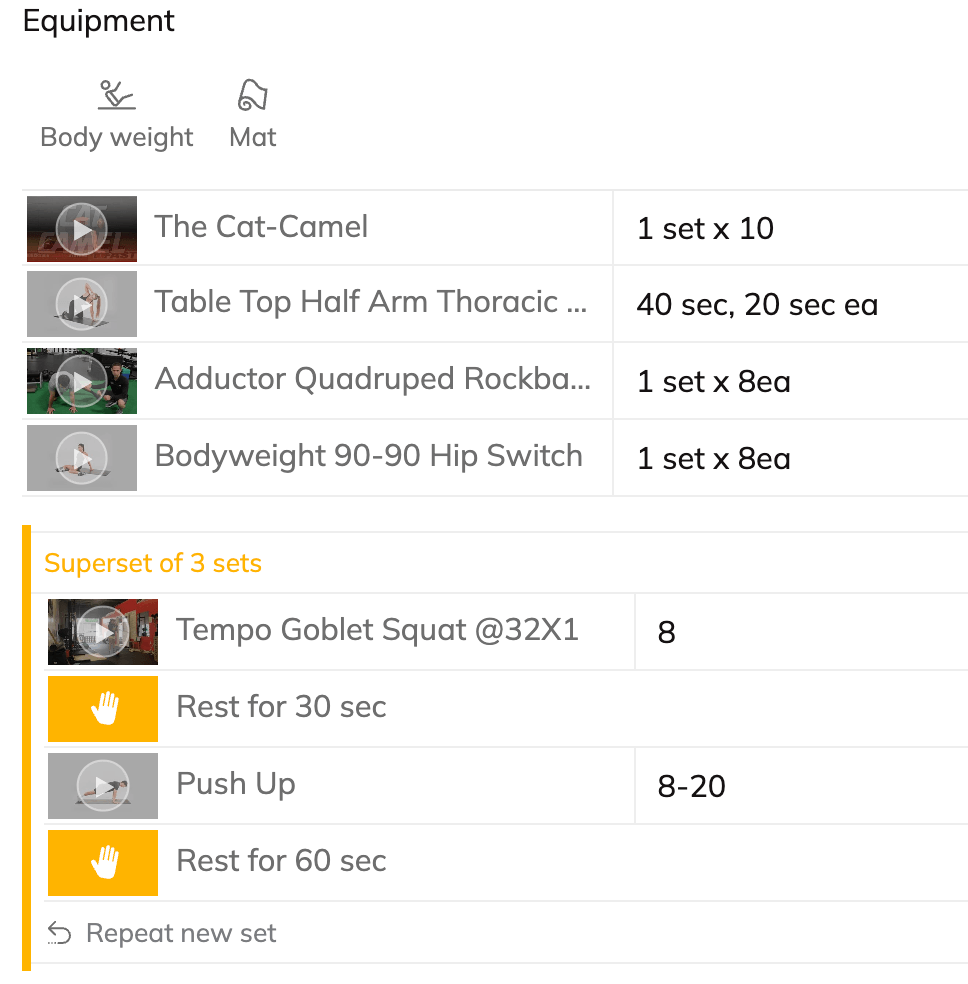
Then, do an Upper/Lower split on the weekend and get after it with more exercises and sets.
Need an example? Here’s a simple Upper/Lower split you can try this weekend. Just grab a pair of dumbbells and get after it.
Saturday: Upper Body Focus
A1. Incline Barbell Bench Press — 3 sets of 5-7 reps
B1. 1-Arm Dumbbell Row — 3 sets of 10-12 reps per side
C1. Alternating Dumbbell Overhead Press — 3 sets of 6-8 reps per side
C2. Neutral Grip Lat Pulldown — 3 sets of 10/8/6 reps
D1. Incline Bench Bicep Curls — 2 sets of 8-10 reps
D2. Cable Tricep Overhead Extensions — 2 sets of 12-15 reps
Rest 1-3 minutes between sets.
Sunday: Lower Body Focus
A1. Barbell Back Squat — 3 sets of 10 reps (increase intensity each set, ending with a RPE 9 third set)
B2. Dumbbell Romanian Deadlift — 3 sets of 8-10 reps
C1. Front Foot Elevated Split Squat — 3 sets of 8-10 reps
C2. Ab Wheel Rollout — 3 sets of 6 reps
D1. Kettlebell Swings — 3 sets of 15 swings
D2. Suitcase Carry — 2 sets of ~40 meters ea hand
Rest 1-3 minutes between sets.
This weekend-only training plan was the perfect fit for Joshua:
“I love the “snack” workouts during the week. Quick, short movements. Love it. Just enough to say you did something.”
— Joshua, coaching client
What about cardio?
Feel free to plug in a shorter, more intense cardio session during the week (instead of a quick strength workout), and then add longer cardio on the weekend if you have time.
Another strategy I recommend: use weekdays to rack up steps.
Whether it’s walking the dog after work or an evening stroll with your spouse, we know walking is powerful for your health — and it usually takes less mental effort (aka activation energy) than a full workout.
Ready to Build Your Weekend Warrior Plan?
If you’ve been struggling to stay consistent during the week, you’re not failing — you might just need a plan that fits your life right now.
Starting with two solid workouts on the weekend can be the simple shift that makes everything else feel easier.
And if you want help building a plan around your schedule (instead of squeezing into someone else’s), that’s exactly what we do with our coaching clients. Learn more about coaching here.

B.J. holds a B.S. in Health and Human Performance and multiple certifications, including Precision Nutrition Level 1 and BioForce Certified Conditioning Coach. Over his 14-year coaching career, he’s been fortunate enough to coach a wide range of clients. From online clients looking to get in great shape to CEO Nate Checketts (Rhone) and CEO Marcelo Claure (Softbank), and professional skateboarder Sean Malto. Before beginning his training career, he was a sports science lab research assistant.

Quest Vanilla Spiced Mug Cake Recipe
At some point, “vanilla” became shorthand for boring, and frankly, we’re not sure who authorized that. Questified Vanilla Spiced Mug Cake would like the record corrected. Quest Vanilla Flavored Protein Milkshake gets mixed up with cinnamon and allspice, then emerges warm, fluffy, and decidedly more delicious than the haters would suggest. Top it with whipped cream and another dusting of cinnamon. Vanilla would like an apology.
Check out the full recipe below:

NUTRITIONAL INFO
VANILLA SPICE MUG CAKE
Yields: 2 servings | Serving Size: 1/2 mug cake
Calories: 120 | Protein: 10g | Fat: 5g | Net Carb: 8g
Total Carb: 10g | Sugar: 0g
Ingredients
VANILLA SPICE MUG CAKE
- ¼ cup + 2 tbsp Quest Vanilla Milkshake Protein Shake
- 1 egg white
- 2 tbsp gluten free flour
- 2 tbsp almond flour
- 1 tbsp coconut flour
- ½ tsp zero calorie sweetener
- ¼ cup baking powder
- ¼ tsp cinnamon
- ⅛ tsp all spice
- Pinch salt
Method
- Place the dry ingredients into a bowl and whisk to combine.
- Add in the Quest Vanilla Protein Shake and egg white and stir until no dry spots remain.
- Spray a mug with non-stick spray and pour the batter into the bottom.
- Cook the mug cake in the microwave on high for 60-80 seconds.
- Top with more cinnamon or whipped cream and serve.
Do Meat-Eaters Have More Antibiotic Resistance in Their Guts?
Those eating plant-based have a reduced load of antibiotic resistance genes in their gut.
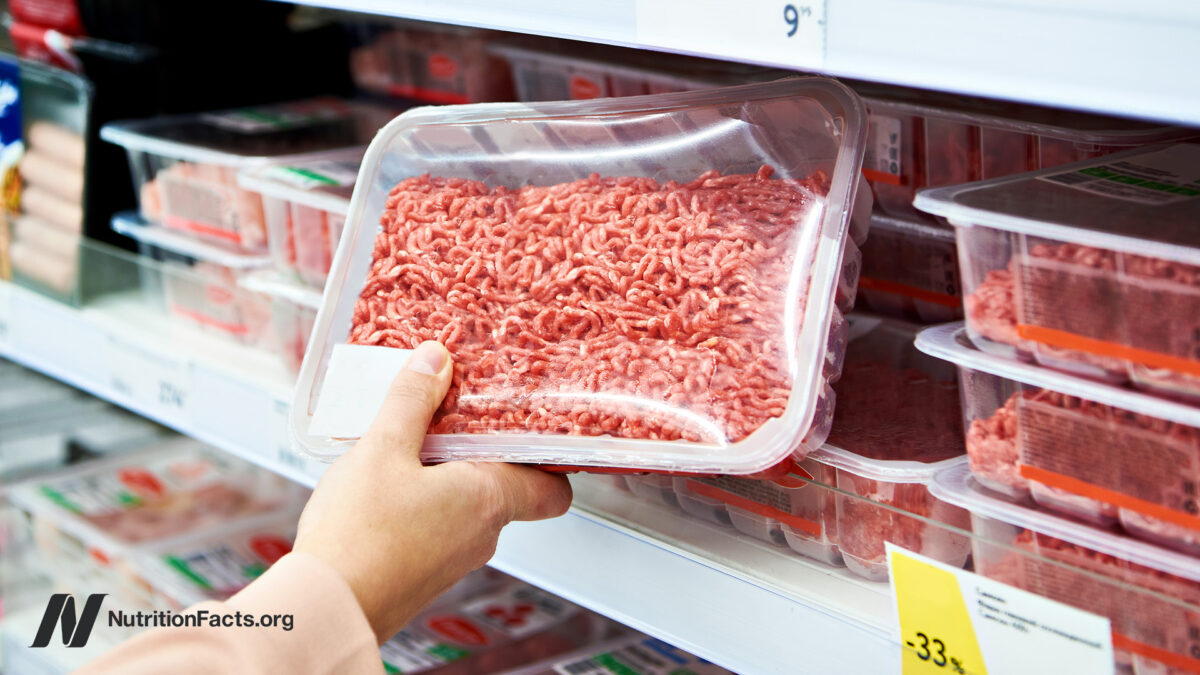
There are nearly one million Salmonella and Campylobacter infections in children 10 years and younger each year in the United States alone. Some of these infections are severe, causing meningitis and death, and requiring treatment with antibiotics. However, there’s an increasing problem of antibiotic resistance among these bugs that threatens our ability to treat them. Part of the issue is that the same life-saving, miracle-drug antibiotics are being squandered in animals raised for food for things like growth promotion in unhygienic, crowded conditions, which increases the likelihood that pathogens like Salmonella or Campylobacter will become resistant. (I’ve done a bunch of videos on this.) There’s another problem. The resistance determinants, the genes that encode antibiotic resistance, may be transmitted from farm animals to humans through the food supply. Most antibiotic-resistant bacteria have mobile genetic elements—these little circles of DNA called plasmids—that carry the resistance genes that they can pass on to other bacteria, including those in our own gut.
Farm animals are, therefore, “a reservoir of antibiotic resistance genes and a potential vector for transmission” of these resistance genes to the human intestinal microbiota. In one study, researchers used a model that mimics the human intestines to assess the transfer of an antibiotic-resistance plasmid from E. coli originating from a chicken raised for meat to bacteria in the human gut. And it happened within two hours. This spread of antibiotic-resistance genes presents “an alarming scenario,” “a growing concern that antibiotic resistant bacteria present on food can transfer their resistance genes to the inherent gut microbiota of the consumer,” as you can see here and at 1:51 in my video Antibiotic Resistance Genes in the Guts of Vegetarians vs. Meat-Eaters.
But you don’t know until you put it to the test. Researchers compared antibiotic-resistance gene loads in the gut bacteria of vegans, vegetarians, and omnivores. You’d think the results might be obvious, but antibiotic-resistance genes are spread by applying manure to agricultural fields of fruits and vegetables. Yes, massive antibiotic use in animal farming is thought to be the greatest contributor to antibiotic-resistant bacteria in foods of animal origin, such as meat, eggs, and dairy. However, sewage from treated animals may impact vegetables grown on fertilized fields, but it was largely unknown whether, and to what extent, antibiotic-resistant bacteria are being transferred to vegetables and then to the human gut. That is, until researchers looked for antibiotic-resistant genes against sulfa drugs like Bactrim, tetracyclines, penicillins and cephalosporins, and streptomycin-type antibiotics. They found both omnivores and vegetarians showed a significantly higher antibiotic-resistant gene load in their guts compared to vegans.
There wasn’t a significant difference between omnivores and vegetarians, but vegans had significantly lower loads than both omnivores and vegetarians—“the first evidence that a vegan life style is associated with a reduced load of human gut [antibiotic-resistant genes],” but not the last. There were fewer tetracycline-resistance genes in vegan guts and more vancomycin-resistance genes in the guts of those who eat meat. That’s no surprise, since they found a correlation between tetracycline-resistance genes and the intake of eggs, milk, and cheese, and a higher incidence of vancomycin-resistance genes was found in those who ate eggs, poultry, fish, and seafood. Vancomycin is one of our antibiotics of last resort, used to treat serious life-threatening strep and staph infections like MRSA.
Despite the links to dairy and eggs, just cutting out meat has indeed been shown to offer an advantage in some studies, as bacteria obtained from meat-eater stool samples showed resistance to a greater number of antibiotics and carried more tested antibiotic-resistance genes compared to vegan or vegetarian stool samples.
Doctor’s Note
The combined lobbying might of Big Ag and Big Pharma has prevented the United States from following the recommendations of nearly every major medical and public health entity to restrict the use of life-saving drugs to prop up agribusiness. Shame on the animal agriculture and pharmaceutical industries. More on this unacceptable practice in:
What Sustainable Fat Loss Really Looks Like (Janet’s 19-Pound Shift)
We don’t believe in “hacks” when it comes to fitness. But if there’s one sustainable fat loss insight that could change everything, this might be it.
Janet lost ~19 pounds from August to January — without starving herself, obsessing over macros, or cutting out all the foods she loves.
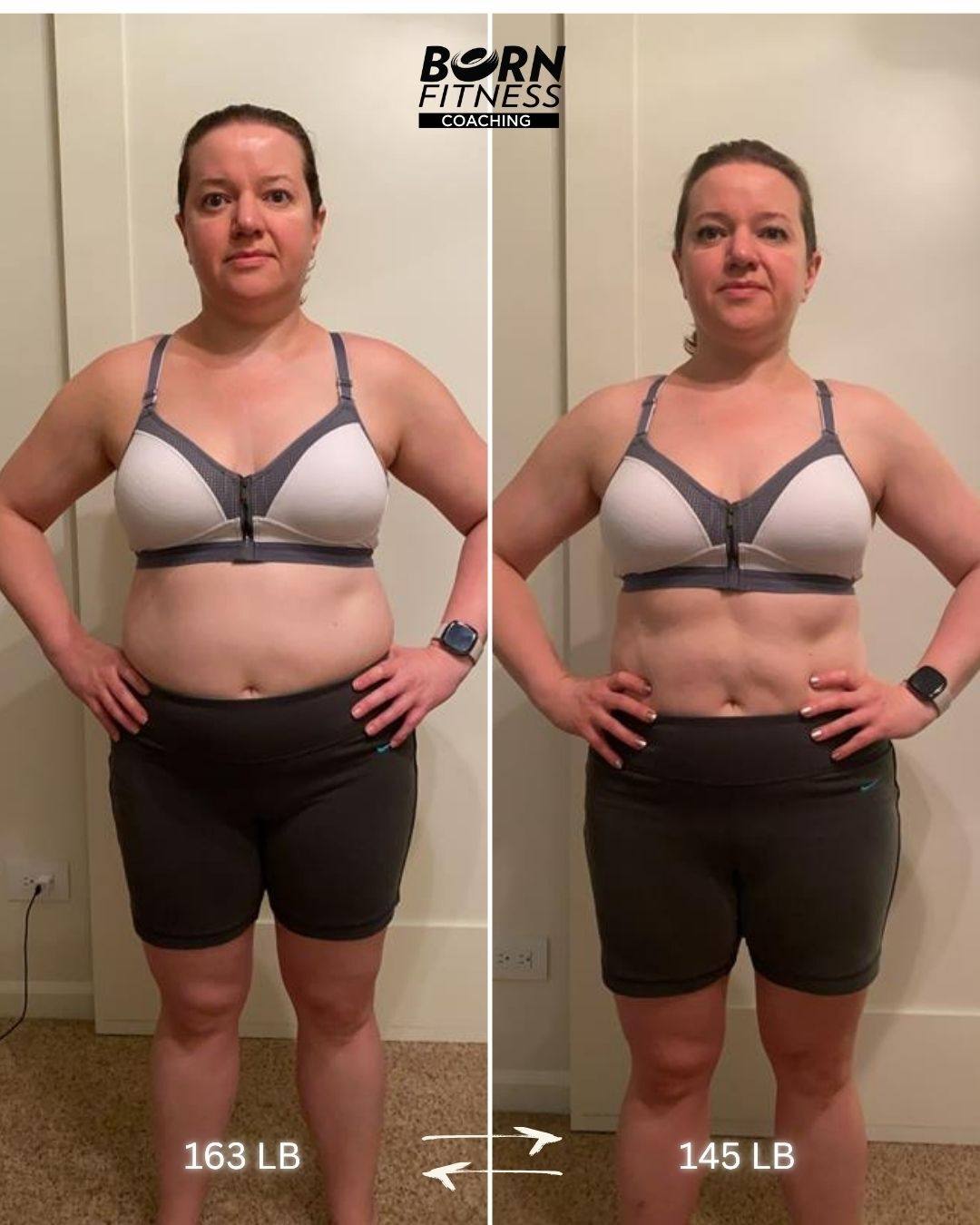
What finally clicked for her might change how you approach fat loss too.
Janet’s Before: The All-or-Nothing Trap
The first rule of fat loss is you need to be in a caloric deficit. In non-science speak, you need to eat less than what you burn daily.
But, right here is where we try to break from what you’ve been told.
Like many people, Janet believed fat loss meant eating as little as possible — and that belief kept backfiring. She spent years trapped in the restrict-then-rebound cycle. She’d lose some weight, then gain it back the moment stress spiked or her willpower faded.
A caloric deficit doesn’t mean you have to starve or restrict all of your favorite foods. That is just the ticking time bomb of fat loss. The moment you make that decision, it’s inevitable that the plan will explode in your face.
The Shift: A New Way to Look at Fat Loss
“We should be able to eat as much as we can and still lose weight.”
That one sentence flipped the script for Janet. Instead of asking “How little can I eat?” she started asking, “How much can I eat — while still making progress?”
That’s the hack. It might not seem like much, but it’s the “A-ha!” moment that changes things for most of our coaching clients. Then we help build habits, schedules, and foods you can enjoy around that life-changing fat loss approach.
You see, much of dieting success comes down to how well you can figure out when you need to eat more and when you need to eat less. This is how you create a sustainable calorie deficit.
While you can count macros to make this happen, to make this stick long term you’ll also need to shift your fat loss mindset, learn to tap into your hunger cues, and understand how to eat in a way that both helps you lose weight and feels sustainable.
From Starving to Sustainable: What Janet’s Fat Loss Plan Looked Like
Janet’s transformation didn’t require extreme dieting, hours of cardio, or giving up the foods she loved. Instead, it looked like this:
- Including favorite foods intentionally – Pizza night with the family wasn’t banned. She learned how to enjoy indulgences without guilt or spiraling.
- Walking most days – Nothing fancy. Just consistent daily movement that helped support recovery, stress, and calorie burn.
- Strength trained 3 times per week – Circuit based workouts that increased calorie burn by decreasing rest periods and increasing volume. Later on, Janet progressed to a strength-building focus.
- Adjusted her intake based on life – When she was hungrier or more active, she ate more. On quieter days, she pulled back. No rigid rules, just awareness and flexibility.
The result? A plan that matched her lifestyle, not one that required a complete overhaul.
Why Sustainable Fat Loss Worked for Janet
There was no “perfect” diet or magical workout.
What changed was Janet’s mindset around fat loss.
She shifted from trying to follow someone else’s strict plan… to learning how to build a structure that actually fit her reality. One she could repeat even when life got messy.
That’s the real “hack.” It’s not about doing more — it’s about doing what matters most consistently.
In Janet’s words:
“Other programs want to tout the whole, ‘It’s a lifestyle change,’ when I think this is the only one I’ve done that actually is. And that’s why I feel the way I do like I’m not really on a program because everything I’m doing now is how I normally live. Part of me does wonder how this all happened because, dare I say, it’s been pretty easy.”
Key Takeaways for You
If you’re stuck in the same restrict-rebound cycle Janet was in, start here:
- Flip your mindset from “how little can I eat?” to “how much can I eat and still make progress?”
- Don’t cut everything you love. Sustainable fat loss includes satisfaction, not just sacrifice.
- Focus on patterns, not perfection. Janet wasn’t perfect — she was consistent.
- Build around your real life. Stress, busy weeks, travel — they’ll happen. Your plan should flex with you.
Want results that actually stick — like Janet’s?
Our 2:1 coaching isn’t about rules or restrictions. It’s about building something that works for your life. If you’re tired of starting over, let’s build your last fat loss plan together. Learn more about our 1:1 coaching here.
B.J. holds a B.S. in Health and Human Performance and multiple certifications, including Precision Nutrition Level 1 and BioForce Certified Conditioning Coach. Over his 14-year coaching career, he’s been fortunate enough to coach a wide range of clients. From online clients looking to get in great shape to CEO Nate Checketts (Rhone) and CEO Marcelo Claure (Softbank), and professional skateboarder Sean Malto. Before beginning his training career, he was a sports science lab research assistant.
-
 HEALTH & WELLNESS8 years ago
Acidophilus: A Probiotic Bacterium
-

 herbs3 years ago
The Ultimate Guide to Ashwagandha Extract: Stress Relief and Optimal Health Unveiled
-
 HEALTH & WELLNESS7 years ago
Herbs and Essential Oils to Fight Coronavirus
-
 TRAINING & FITNESS8 years ago
6 Ways to Decrease your Shoulder Pain!
-
 Fitness8 years ago
“No Pain, No Gain” True or Just a Fitness Myth
-
 HEALTH & WELLNESS8 years ago
Why Muscles Get Sore
-
 DIET & NUTRITION8 years ago
Low Carb Diet: Carbohydrates Influence on Testosterone
-
 TRAINING & FITNESS7 years ago
Training to Failure Every Set… Pathway to New Muscle or Pathway to Overtraining?