
Uncategorized
10 Best Alternatives to Squats and Deadlifts (Joint-Friendly)

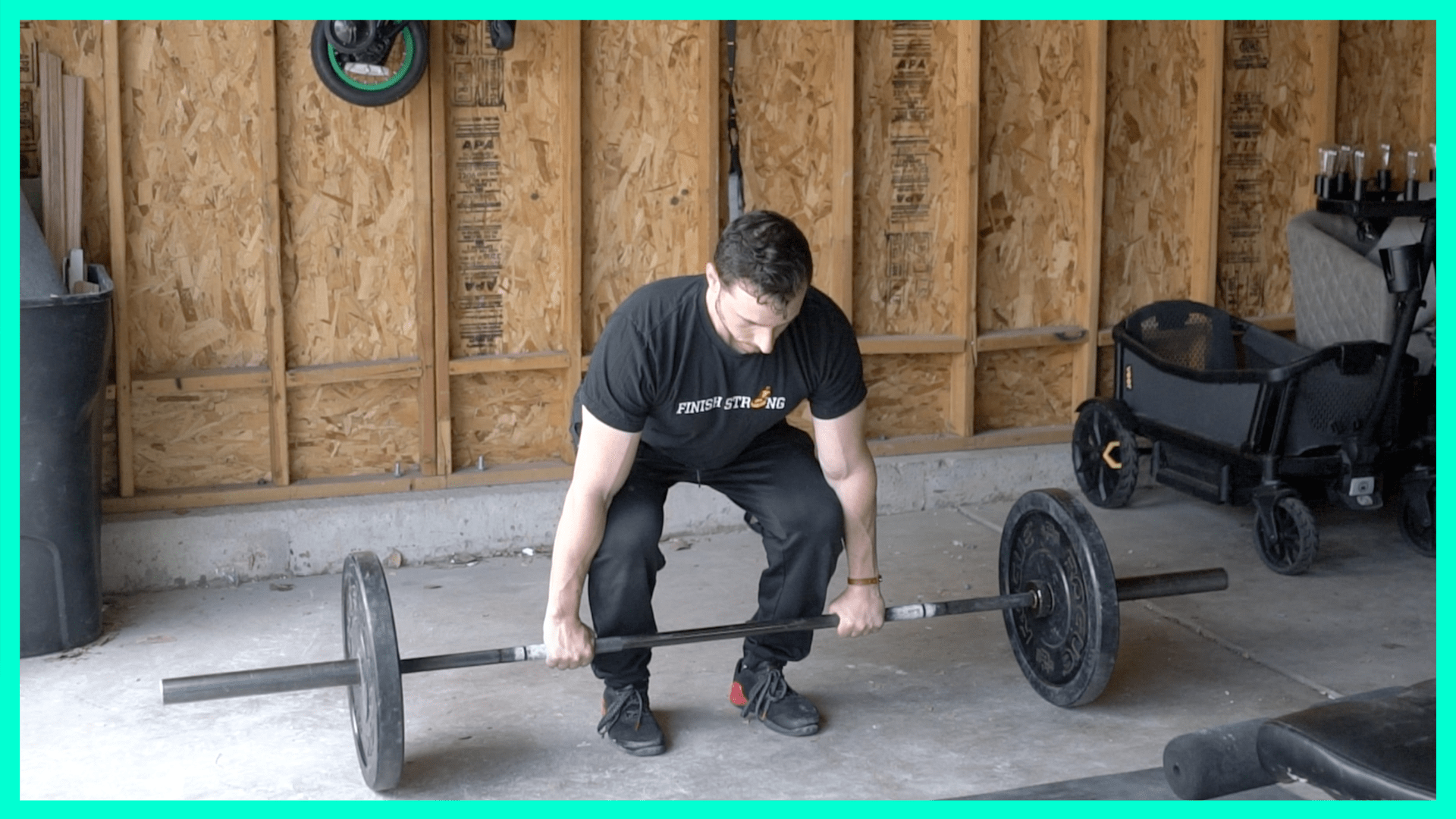
10 Best Alternatives to Squats and Deadlifts (Joint-Friendly)

Getting leaner doesn’t mean you need to beat yourself up in the gym.
When I first started coaching, I thought barbell squats and deadlifts were non-negotiable. I plugged them in almost every client’s workout.
But in over 17 years of coaching I’ve learned that while they’re incredible lifts, they’re not required to get strong, build muscle, or drop body fat—especially if you’re over 40.
I didn’t remove them from the toolbox. Not every client responds poorly and some goals require training in these lifts.
But, more often than not, I choose different exercises.
Before we go on, don’t mistake avoiding heavy barbell squats for not knowing how to squat correctly.
The ability to do a deep bodyweight squat and hip hinge (the base pattern of a deadlift) is vital for a lifetime of pain-free movement. You should train and maintain those patterns throughout your lifetime.
But you don’t need a barbell to teach your body these patterns—or to build strength once you’re confident.
What Makes an Exercise the “Right Fit”?
So, what makes an exercise a good fit for you? There are a few rules to check off.
First: the movement should be pain-free under load.
This isn’t the marines. “No pain, no gain” doesn’t help you build more muscle or get stronger — it just leads to injury and months of missed workouts.
Second: you should feel the target muscles working during the exercise.
While research debates how much the “mind-muscle connection” matters, it’s still a useful filter: how an exercise feels can help you pick the right ones for your body.
For example, if you’re doing a squat variation, you want to feel it in your quads, hamstrings, and glutes. If you mostly feel it in your lower back — and you’re sure your technique is solid — it’s probably not the best fit for you.
In short, a good exercise fit:
- Is pain-free under load
- Lets you feel the right muscles working
- Builds strength without beating up your body
Use these rules as a guide, and you’ll find movements that not only fit better — they’ll get you stronger, faster, and help you train for a lifetime.
With that in mind, here are some of my go-to replacements for barbell squats and deadlifts.
If you’re dealing with nagging aches, limited mobility, or just want lower-stress training options, these 10 alternatives (plus a few bonus moves) are for you. You’ll still build serious strength — without beating up your joints
10 Alternatives to Squats and Deadlifts That Build Strength Without Pain
Alternatives to the Barbell Back Squat
Low Box Step-Ups – Don’t sleep on this deceptively simple move. A low box allows you to load up the weight. Plus, if your hips are tight a low box step up keeps you within a range of motion your hips can handle (and that protects your lower back).
Dumbbell Box Squat – This move will work the legs and help you work on a deeper squat by improving your hip mobility. If your hips are stiff, try spinning your toes out a little bit.
Once the Dumbbell Box Squat feels good – and you’ve added some load – try Heel Elevated Goblet Squats.
Wall Hack Squats – Training at home? This exercise will smoke your quads (the front of your legs) while sparing your back.
Front-Foot Elevated Split Squats – Start here when split squatting. Elevating your front foot unloads the front leg and makes it easier to learn the movement.
Then, makes things more spicy with everyone’s favorite move to hate, the Rear-Foot Elevated Split Squat.
Sled Pushing or Pulling – Push or pull it, both are joint-friendly ways to build serious lower body strength. My go-to training tool for clients over 40.
Alternatives to Barbell Deadlifts
Box Split RDLs – Even if traditional RDLs feel great, a Kickstand RDL (or b-stance RDL) is a great way to boost hip mobility, develop single leg stability, and pump up the glutes.
Supported Single-Leg Deadlifts – Single-leg Deadlifts are a fantastic move for your hamstrings and glutes. But the limiting factor often isn’t your strength, it’s your balance. Use a support to shift the focus to challenging loads and quality movement.
Tall Kneeling Good Morning – While a Barbell Good Morning might not feel great on your lower back, Tall Kneeling Good Mornings helps you train the lower back and hamstring with far less shear stress on the lower back.
Hamstring Curls (Machine, Swiss Ball, TRX, Sliders) – Easy on the knees and functional, you should get a steady diet of hamstring curls in your workout. Oh, and this is where machines shine.
Kettlebell Swings – If you haven’t learned how to do a proper swing, they could potentially tweak your back. But, that’s like saying picking up a laundry basket is bad for your back (it’s not). Do it the wrong way, and anything can happen.
With kettlebell swings, the key is the path of the kettlebell. If you’re letting the bell drift down towards the ground (and not swinging it under your butt), you’ll put more stress on your lower back.
And don’t limit yourself to square stance, or bilateral, swings. Try mixing up your stances to unlock more mobility and athleticism.
Training should build you up, not beat you down.
Heavy squats and deadlifts are powerful tools — but they’re not the only ones. If your goal is to get leaner, stronger, and stay active for decades to come, mastering better versions of squats and hinges for your body is what really matters.
If you want expert help building a strength plan that fits your body — pain-free and customized to your goals — learn more about Born Fitness online coaching.
B.J. holds a B.S. in Health and Human Performance and multiple certifications, including Precision Nutrition Level 1 and BioForce Certified Conditioning Coach. Over his 14-year coaching career, he’s been fortunate enough to coach a wide range of clients. From online clients looking to get in great shape to CEO Nate Checketts (Rhone) and CEO Marcelo Claure (Softbank), and professional skateboarder Sean Malto. Before beginning his training career, he was a sports science lab research assistant.
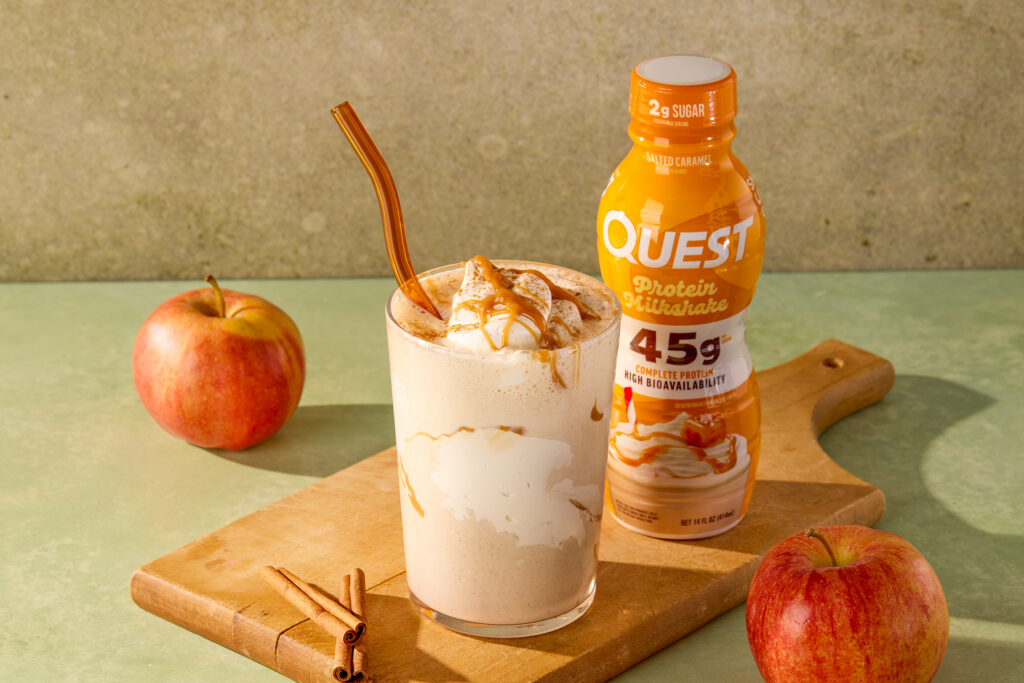
Quest Apple Pie Salted Caramel Milkshake Recipe
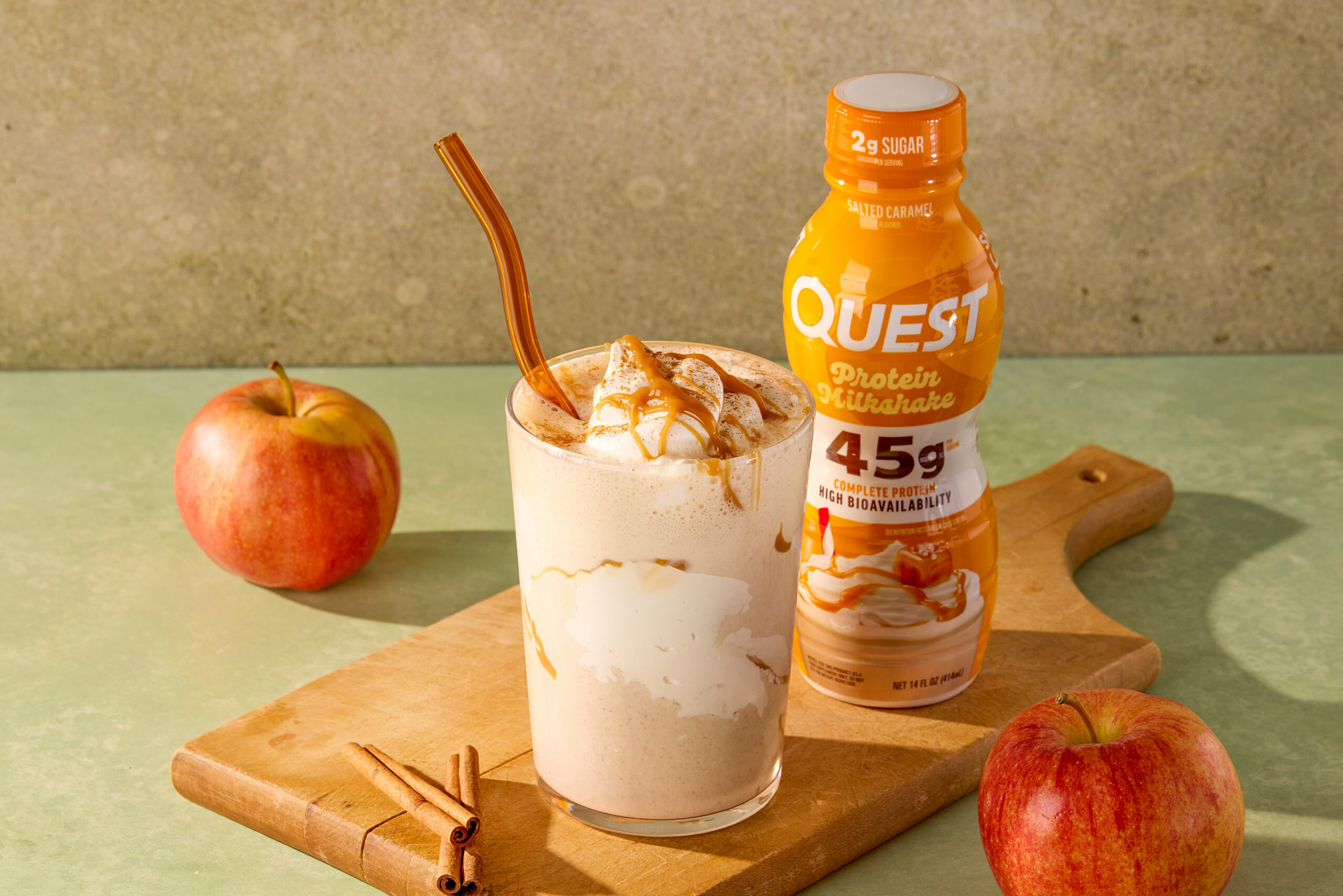
Apple pie and salted caramel have nothing to hide. Cauliflower, on the other hand, would prefer to keep a low profile. Questified Apple Pie Salted Caramel Milkshake sneaks the undercover veggie in alongside frozen apples, Greek yogurt, cinnamon and Quest Salted Caramel Protein Milkshake for a creamy fall mashup that tastes like it has absolutely no vegetables to explain. Top it with whipped cream and a caramel drizzle, then ask no further questions. What happens in the blender stays in the blender.
Check out the full recipe below:
NUTRITIONAL INFO
APPLE PIE SALTED CARAMEL MILKSHAKE
Yields: 2 servings | Serving Size: 1/2 glass
Calories: 140 | Protein: 18g | Fat: 2g | Net Carb: 8g
Total Carb: 9g | Sugar: 6g
Ingredients
APPLE PIE SALTED CARAMEL MILKSHAKE
Toppings – Optional:
- ¼ cup cool whip, sugar free
- ½ tbsp sugar free caramel sauce
Method
- Place the apples, ice, Quest Salted Caramel Protein Milkshake, yogurt and cinnamon into a blender and blend until smooth.
- Transfer to a glass and top with cool whip and caramel if desired. Serve.
Are Rare Sugars Like Allulose Actually Healthy?
Are rare sugars like allulose a healthy alternative to traditional sweeteners?
Allulose is a kind of low-calorie sugar that exists naturally in very small quantities but is now industrially produced as a commercial sweetener. It’s said to have advantages that make it comparable to erythritol as a sugar substitute. It’s also said to have anti-diabetic effects, but that study was on obese mice. Allulose decreases LDL cholesterol levels in hamsters fed a high-fat diet and is said to have a substantial impact on obesity in lard-munching mice, but what about men and women?
In a petri dish, allulose inhibits fat cell precursors from maturing into fat cells and reduces the amount of fat accumulation within fat cells. Below are before-and-after pictures when regular sugar was replaced with allulose; the fat is stained red. You can also check out the photos at 0:56 in my video Is Allulose a Healthy Sweetener?.
The researchers concluded that allulose might be a promising sugar substitute for an anti-obesity diet, but you don’t know until you put it to the test.
In another study, researchers gave people about a teaspoon of allulose a half hour before eating a meal. Compared to the no-sugar control group, the allulose group started burning more fat. The researchers concluded that allulose enhances after-a-meal fat burning, “indicating that it could be a novel sweetener to control and maintain healthy body weight, probably through enhanced energy metabolism.” First of all, it was only 15 calories of fat burned over that four-hour period. They didn’t burn more calories overall either. They just switched from burning carb calories to fat calories, and they may have switched back later and made up the difference over the course of the day.
We can’t just look at one meal—we need to track people’s actual weight over time. So, researchers set up a study comparing high-fructose corn syrup to the weight-reducing effect of a syrup that included about 5% allulose. The results showed significant decreases in body fat, body weight, and waist circumference with the syrup, but it was a proprietary mixture and, frankly, anything would look good against high-fructose corn syrup.
I found the study I’d been looking for: Researchers evaluated the effect of allulose for fat mass reduction in humans. More than a hundred people were randomized to a placebo control (sucralose) or a teaspoon of allulose twice a day, or one and three-quarter teaspoons twice a day. Despite no change in physical activity or calorie consumption between the two groups, body fat significantly decreased after allulose supplementation. Researchers even took CT scans so they could tell where the fat was disappearing from.
Now, the drop in body fat was only about two pounds over 12 weeks, and the drop in abdominal fat in the higher-dose group was almost totally a drop in subcutaneous fat, the flabby superficial fat, not the deeper, dangerous visceral fat that really matters for health. But still, the body fat loss despite no change in calorie intake was similar to what was seen in the mice. However, the hamster effect did not materialize—there was no significant change in LDL cholesterol in either of the allulose groups. What are the purported anti-diabetes effects?
If people chug a beverage with up to about two teaspoons of allulose alone or with a big load of rapidly digesting carbs, the allulose alone has predictably no influence on blood glucose or insulin concentration. Yet, when they consume allulose along with the refined carbs, there is actually a suppression of the elevation of blood sugar and insulin, and by a significant amount—a 30% drop in blood sugar and insulin levels over a two-hour period.
This may be because the presence of allulose impairs the absorption of sugar through the intestinal lining, because they all might be competing for the same sugar transporter. But who’s chugging maltodextrin? What about eating a regular meal? One study looked at people with borderline diabetes who could use some blood sugar spike suppression. A randomized, double-blind, placebo-controlled crossover experiment tested what drinking one and a quarter teaspoon of allulose in a cup of tea with a meal would do, and there was indeed a significant drop, though only about 15%.
The researchers also did a second experiment randomizing people to a little over a teaspoon of allulose three times a day with meals for 12 weeks. There didn’t appear to be any adverse side effects, but there also weren’t any weight loss effects in contrast with the other study. So, the body fat data are mixed, and so too are the sugar data. One study found no effects of allulose on blood sugars in healthy participants, though a similar study on people with diabetes did. A systematic review and meta-analysis of all such controlled feeding trials suggested that the acute benefit on blood sugars was of “borderline significance,” and it’s unclear whether this alone could translate into meaningful improvements in blood sugar control over time. So, maybe it’s not enough to just add allulose. You might actually have to also cut out the junk.
Although the ability to suppress blood sugar responses is the most well-studied aspect of allulose, I do want to cover just one last angle. Researchers found that allulose extends the lifespan of a tiny roundworm called C. elegans through a dietary restriction mechanism, even though the worms being studied ate the same amount of food as the control group. Two months in, just a few percent of the control group were still alive, whereas twice as many in the low-allulose group and about 25% in the higher-allulose group were still alive, as you can see below and at 5:53 in my video.
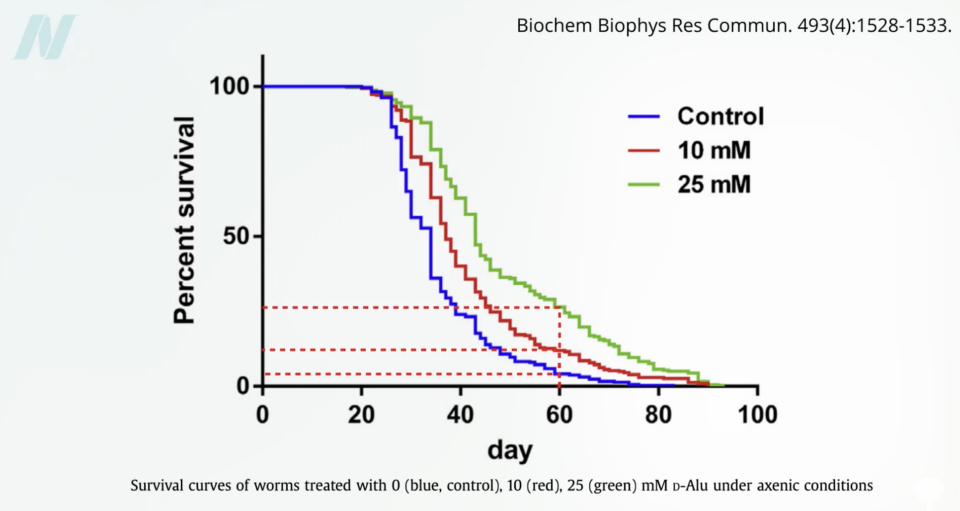
It may have worked by boosting the expression and activities of antioxidant enzymes in the body, extending lifespan by mopping up free radicals. But who cares about the survival curves of worms?
Well, C. elegans is a well-studied model of aging and longevity, mostly just for convenience’s sake, but it does share most of the longevity genes or pathways researchers are interested in. It would be nice to see experiments on human cells, at least, and here we go: A study looked at the effect of allulose on free radicals and oxidative stress in human coronary artery endothelial cells, the cells that line the inside of our arteries. Add a bunch of sugar, and free radical levels shoot up, but add the same amount of sugar along with some allulose, and it’s as if you never even added the sugar, as you can see below and at 6:41 in my video.
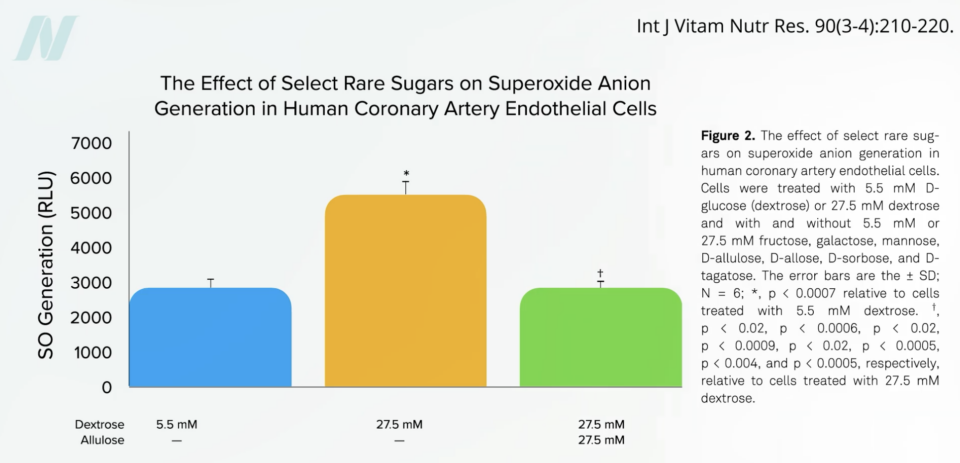
This then translates to inhibiting the expression of an inflammatory marker that plays a role in the buildup of atherosclerotic plaque. However, it’s still too early to make conclusions about the clinical relevance of these data.
So, are these rare sugars like allulose healthy alternatives to traditional sweeteners? Considering the variety of potentially beneficial effects of allulose without known disadvantages from toxicological and metabolic studies, “allulose may currently be the most promising rare sugar,” but how much is that saying? We just don’t have a lot of good data from human studies, therefore “it may be too early to recommend rare sugars for human consumption.”
Doctor’s Note
If you missed the previous blog, see Can Allulose Replace Sugar?.
The healthiest sweeteners are whole foods—fresh, frozen, or dried fruits like dates. Here is my simple (and delicious) recipe for date syrup.

Too Busy to Work Out? Try This Weekend-Only Workout Plan.
It feels like there is an unwritten rule that you have to do most of your training during the week.
In reality, family or work commitments (or both) could mean it’s not the right fit for your life.
Take our client, Joshua. Burning the candle on both ends, he was exhausted during the work week and struggling to find time to workout.
“The problem I’m having is working out during the work week. It’s either before or after work. It’s tough to solve. I’m tired on both ends of the work shift. I have a far drive to the office as well. Any pointers or thoughts on how to just become a consistent morning or evening workout person?”
— Joshua, coaching client
Instead of suggesting tips and tactics to become a more consistent morning workout person, we needed to ask a different question.
Why not try a weekend-only workout plan?
Can You Get Fit in 2 Days?
A recent study (link) found that people who exercised only on Saturdays and Sundays “had a lowered risk of mortality that was on par with those who worked out throughout the week” if total activity levels are similar.
In other words, think of your weekly activity levels like calories. As long as you’re hitting your weekly goal, you can probably spread them out however you’d like.
Performing two hard sessions over the weekend (and then plugging 1-2 light sessions during the week — if and when you have time) allows you to hit your training sessions when you have the most time and the most energy.
This approach can keep you healthy – and lower your risk of early death.
The Weekend-Only Workout Template
I often use this template for our clients who travel for business, but it works just as well when your week is jam-packed.
Here’s an example of how it would look:
Monday: Off
Tuesday: Quick workout
Wednesday: Off
Thursday: Quick workout
Friday: Off
Saturday: Big workout
Sunday: Big workout
During the week, use workout snacks — quick 10-15 minute sessions — to move your body and stack small wins.
The key is to keep them low activation energy: easy to start, minimal equipment, and simple to finish. Think of them like the example below — a real workout pulled straight from Joshua’s plan.
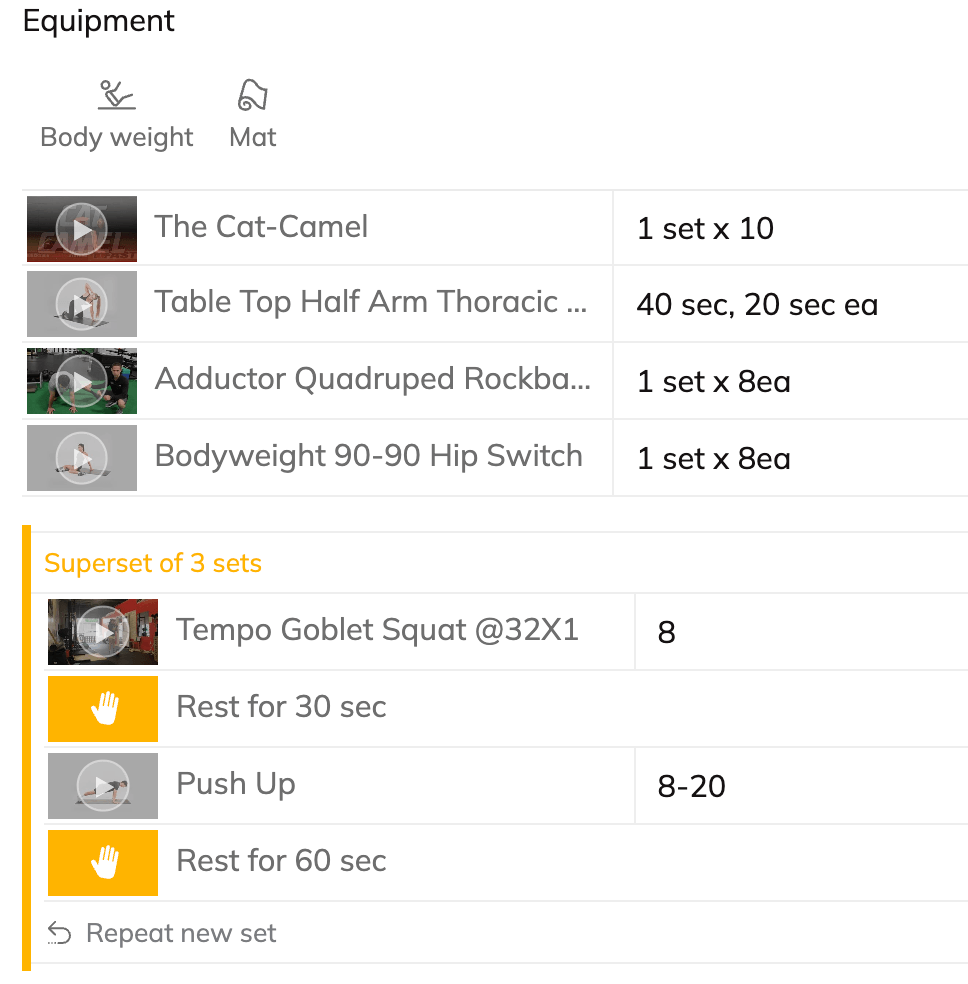
Then, do an Upper/Lower split on the weekend and get after it with more exercises and sets.
Need an example? Here’s a simple Upper/Lower split you can try this weekend. Just grab a pair of dumbbells and get after it.
Saturday: Upper Body Focus
A1. Incline Barbell Bench Press — 3 sets of 5-7 reps
B1. 1-Arm Dumbbell Row — 3 sets of 10-12 reps per side
C1. Alternating Dumbbell Overhead Press — 3 sets of 6-8 reps per side
C2. Neutral Grip Lat Pulldown — 3 sets of 10/8/6 reps
D1. Incline Bench Bicep Curls — 2 sets of 8-10 reps
D2. Cable Tricep Overhead Extensions — 2 sets of 12-15 reps
Rest 1-3 minutes between sets.
Sunday: Lower Body Focus
A1. Barbell Back Squat — 3 sets of 10 reps (increase intensity each set, ending with a RPE 9 third set)
B2. Dumbbell Romanian Deadlift — 3 sets of 8-10 reps
C1. Front Foot Elevated Split Squat — 3 sets of 8-10 reps
C2. Ab Wheel Rollout — 3 sets of 6 reps
D1. Kettlebell Swings — 3 sets of 15 swings
D2. Suitcase Carry — 2 sets of ~40 meters ea hand
Rest 1-3 minutes between sets.
This weekend-only training plan was the perfect fit for Joshua:
“I love the “snack” workouts during the week. Quick, short movements. Love it. Just enough to say you did something.”
— Joshua, coaching client
What about cardio?
Feel free to plug in a shorter, more intense cardio session during the week (instead of a quick strength workout), and then add longer cardio on the weekend if you have time.
Another strategy I recommend: use weekdays to rack up steps.
Whether it’s walking the dog after work or an evening stroll with your spouse, we know walking is powerful for your health — and it usually takes less mental effort (aka activation energy) than a full workout.
Ready to Build Your Weekend Warrior Plan?
If you’ve been struggling to stay consistent during the week, you’re not failing — you might just need a plan that fits your life right now.
Starting with two solid workouts on the weekend can be the simple shift that makes everything else feel easier.
And if you want help building a plan around your schedule (instead of squeezing into someone else’s), that’s exactly what we do with our coaching clients. Learn more about coaching here.

B.J. holds a B.S. in Health and Human Performance and multiple certifications, including Precision Nutrition Level 1 and BioForce Certified Conditioning Coach. Over his 14-year coaching career, he’s been fortunate enough to coach a wide range of clients. From online clients looking to get in great shape to CEO Nate Checketts (Rhone) and CEO Marcelo Claure (Softbank), and professional skateboarder Sean Malto. Before beginning his training career, he was a sports science lab research assistant.
-
 HEALTH & WELLNESS8 years ago
Acidophilus: A Probiotic Bacterium
-

 herbs3 years ago
The Ultimate Guide to Ashwagandha Extract: Stress Relief and Optimal Health Unveiled
-
 HEALTH & WELLNESS7 years ago
Herbs and Essential Oils to Fight Coronavirus
-
 TRAINING & FITNESS8 years ago
6 Ways to Decrease your Shoulder Pain!
-
 Fitness8 years ago
“No Pain, No Gain” True or Just a Fitness Myth
-
 HEALTH & WELLNESS8 years ago
Why Muscles Get Sore
-
 DIET & NUTRITION8 years ago
Low Carb Diet: Carbohydrates Influence on Testosterone
-
 TRAINING & FITNESS7 years ago
Training to Failure Every Set… Pathway to New Muscle or Pathway to Overtraining?