
Uncategorized
Are Rare Sugars Like Allulose Actually Healthy?

Are Rare Sugars Like Allulose Actually Healthy?

Are rare sugars like allulose a healthy alternative to traditional sweeteners?
Allulose is a kind of low-calorie sugar that exists naturally in very small quantities but is now industrially produced as a commercial sweetener. It’s said to have advantages that make it comparable to erythritol as a sugar substitute. It’s also said to have anti-diabetic effects, but that study was on obese mice. Allulose decreases LDL cholesterol levels in hamsters fed a high-fat diet and is said to have a substantial impact on obesity in lard-munching mice, but what about men and women?
In a petri dish, allulose inhibits fat cell precursors from maturing into fat cells and reduces the amount of fat accumulation within fat cells. Below are before-and-after pictures when regular sugar was replaced with allulose; the fat is stained red. You can also check out the photos at 0:56 in my video Is Allulose a Healthy Sweetener?.
The researchers concluded that allulose might be a promising sugar substitute for an anti-obesity diet, but you don’t know until you put it to the test.
In another study, researchers gave people about a teaspoon of allulose a half hour before eating a meal. Compared to the no-sugar control group, the allulose group started burning more fat. The researchers concluded that allulose enhances after-a-meal fat burning, “indicating that it could be a novel sweetener to control and maintain healthy body weight, probably through enhanced energy metabolism.” First of all, it was only 15 calories of fat burned over that four-hour period. They didn’t burn more calories overall either. They just switched from burning carb calories to fat calories, and they may have switched back later and made up the difference over the course of the day.
We can’t just look at one meal—we need to track people’s actual weight over time. So, researchers set up a study comparing high-fructose corn syrup to the weight-reducing effect of a syrup that included about 5% allulose. The results showed significant decreases in body fat, body weight, and waist circumference with the syrup, but it was a proprietary mixture and, frankly, anything would look good against high-fructose corn syrup.
I found the study I’d been looking for: Researchers evaluated the effect of allulose for fat mass reduction in humans. More than a hundred people were randomized to a placebo control (sucralose) or a teaspoon of allulose twice a day, or one and three-quarter teaspoons twice a day. Despite no change in physical activity or calorie consumption between the two groups, body fat significantly decreased after allulose supplementation. Researchers even took CT scans so they could tell where the fat was disappearing from.
Now, the drop in body fat was only about two pounds over 12 weeks, and the drop in abdominal fat in the higher-dose group was almost totally a drop in subcutaneous fat, the flabby superficial fat, not the deeper, dangerous visceral fat that really matters for health. But still, the body fat loss despite no change in calorie intake was similar to what was seen in the mice. However, the hamster effect did not materialize—there was no significant change in LDL cholesterol in either of the allulose groups. What are the purported anti-diabetes effects?
If people chug a beverage with up to about two teaspoons of allulose alone or with a big load of rapidly digesting carbs, the allulose alone has predictably no influence on blood glucose or insulin concentration. Yet, when they consume allulose along with the refined carbs, there is actually a suppression of the elevation of blood sugar and insulin, and by a significant amount—a 30% drop in blood sugar and insulin levels over a two-hour period.
This may be because the presence of allulose impairs the absorption of sugar through the intestinal lining, because they all might be competing for the same sugar transporter. But who’s chugging maltodextrin? What about eating a regular meal? One study looked at people with borderline diabetes who could use some blood sugar spike suppression. A randomized, double-blind, placebo-controlled crossover experiment tested what drinking one and a quarter teaspoon of allulose in a cup of tea with a meal would do, and there was indeed a significant drop, though only about 15%.
The researchers also did a second experiment randomizing people to a little over a teaspoon of allulose three times a day with meals for 12 weeks. There didn’t appear to be any adverse side effects, but there also weren’t any weight loss effects in contrast with the other study. So, the body fat data are mixed, and so too are the sugar data. One study found no effects of allulose on blood sugars in healthy participants, though a similar study on people with diabetes did. A systematic review and meta-analysis of all such controlled feeding trials suggested that the acute benefit on blood sugars was of “borderline significance,” and it’s unclear whether this alone could translate into meaningful improvements in blood sugar control over time. So, maybe it’s not enough to just add allulose. You might actually have to also cut out the junk.
Although the ability to suppress blood sugar responses is the most well-studied aspect of allulose, I do want to cover just one last angle. Researchers found that allulose extends the lifespan of a tiny roundworm called C. elegans through a dietary restriction mechanism, even though the worms being studied ate the same amount of food as the control group. Two months in, just a few percent of the control group were still alive, whereas twice as many in the low-allulose group and about 25% in the higher-allulose group were still alive, as you can see below and at 5:53 in my video.
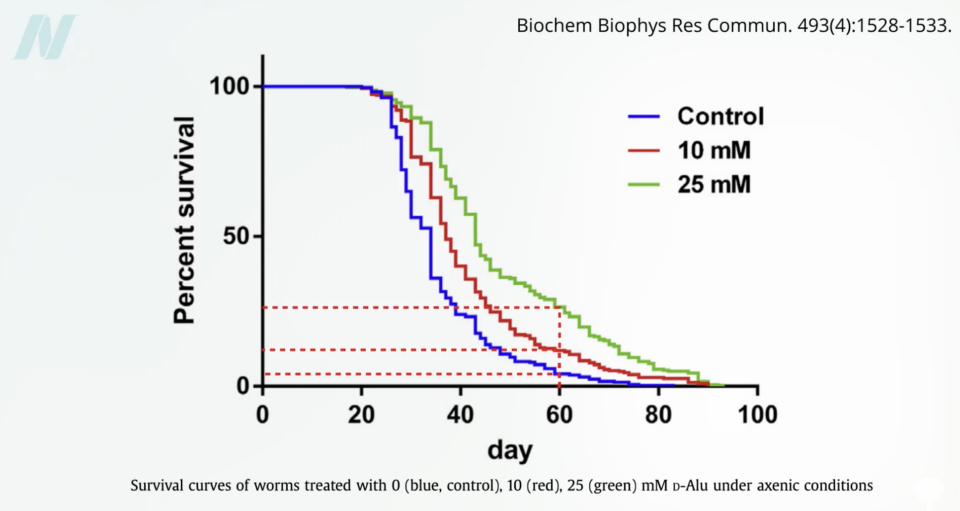
It may have worked by boosting the expression and activities of antioxidant enzymes in the body, extending lifespan by mopping up free radicals. But who cares about the survival curves of worms?
Well, C. elegans is a well-studied model of aging and longevity, mostly just for convenience’s sake, but it does share most of the longevity genes or pathways researchers are interested in. It would be nice to see experiments on human cells, at least, and here we go: A study looked at the effect of allulose on free radicals and oxidative stress in human coronary artery endothelial cells, the cells that line the inside of our arteries. Add a bunch of sugar, and free radical levels shoot up, but add the same amount of sugar along with some allulose, and it’s as if you never even added the sugar, as you can see below and at 6:41 in my video.
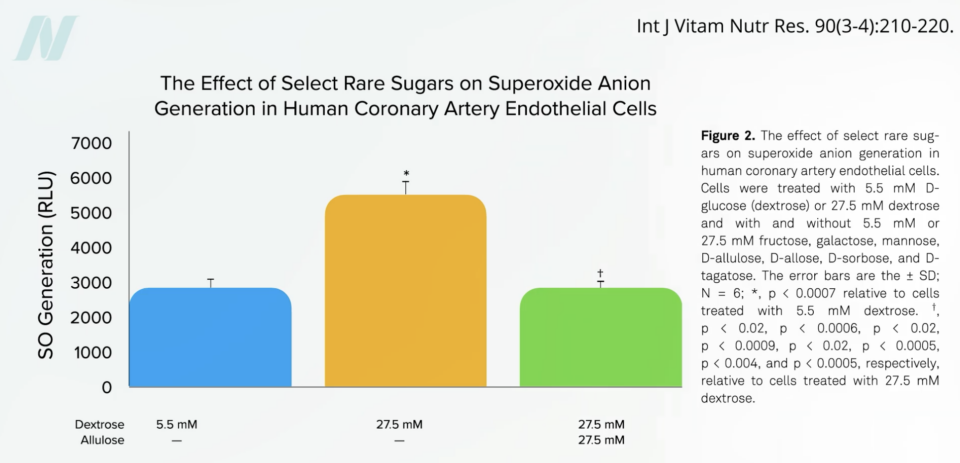
This then translates to inhibiting the expression of an inflammatory marker that plays a role in the buildup of atherosclerotic plaque. However, it’s still too early to make conclusions about the clinical relevance of these data.
So, are these rare sugars like allulose healthy alternatives to traditional sweeteners? Considering the variety of potentially beneficial effects of allulose without known disadvantages from toxicological and metabolic studies, “allulose may currently be the most promising rare sugar,” but how much is that saying? We just don’t have a lot of good data from human studies, therefore “it may be too early to recommend rare sugars for human consumption.”
Doctor’s Note
If you missed the previous blog, see Can Allulose Replace Sugar?.
The healthiest sweeteners are whole foods—fresh, frozen, or dried fruits like dates. Here is my simple (and delicious) recipe for date syrup.




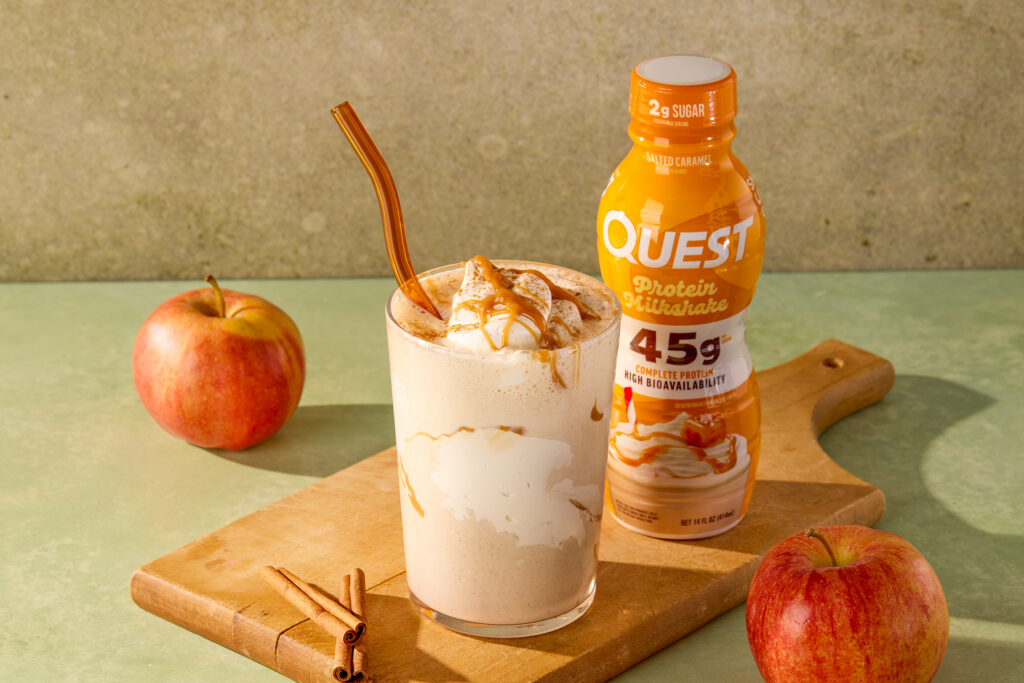
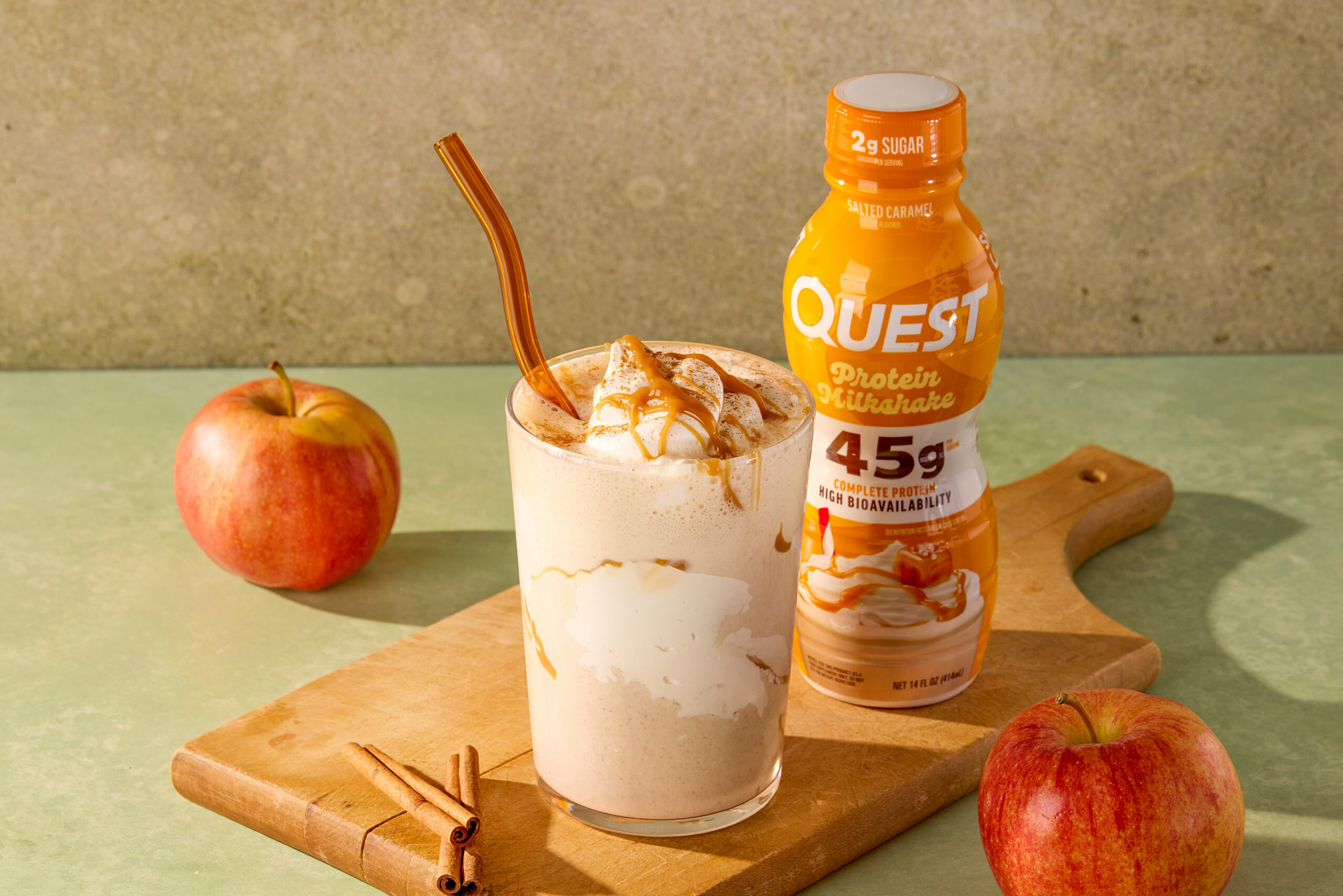
Quest Apple Pie Salted Caramel Milkshake Recipe
Apple pie and salted caramel have nothing to hide. Cauliflower, on the other hand, would prefer to keep a low profile. Questified Apple Pie Salted Caramel Milkshake sneaks the undercover veggie in alongside frozen apples, Greek yogurt, cinnamon and Quest Salted Caramel Protein Milkshake for a creamy fall mashup that tastes like it has absolutely no vegetables to explain. Top it with whipped cream and a caramel drizzle, then ask no further questions. What happens in the blender stays in the blender.
Check out the full recipe below:
NUTRITIONAL INFO
APPLE PIE SALTED CARAMEL MILKSHAKE
Yields: 2 servings | Serving Size: 1/2 glass
Calories: 140 | Protein: 18g | Fat: 2g | Net Carb: 8g
Total Carb: 9g | Sugar: 6g
Ingredients
APPLE PIE SALTED CARAMEL MILKSHAKE
Toppings – Optional:
- ¼ cup cool whip, sugar free
- ½ tbsp sugar free caramel sauce
Method
- Place the apples, ice, Quest Salted Caramel Protein Milkshake, yogurt and cinnamon into a blender and blend until smooth.
- Transfer to a glass and top with cool whip and caramel if desired. Serve.

Too Busy to Work Out? Try This Weekend-Only Workout Plan.
It feels like there is an unwritten rule that you have to do most of your training during the week.
In reality, family or work commitments (or both) could mean it’s not the right fit for your life.
Take our client, Joshua. Burning the candle on both ends, he was exhausted during the work week and struggling to find time to workout.
“The problem I’m having is working out during the work week. It’s either before or after work. It’s tough to solve. I’m tired on both ends of the work shift. I have a far drive to the office as well. Any pointers or thoughts on how to just become a consistent morning or evening workout person?”
— Joshua, coaching client
Instead of suggesting tips and tactics to become a more consistent morning workout person, we needed to ask a different question.
Why not try a weekend-only workout plan?
Can You Get Fit in 2 Days?
A recent study (link) found that people who exercised only on Saturdays and Sundays “had a lowered risk of mortality that was on par with those who worked out throughout the week” if total activity levels are similar.
In other words, think of your weekly activity levels like calories. As long as you’re hitting your weekly goal, you can probably spread them out however you’d like.
Performing two hard sessions over the weekend (and then plugging 1-2 light sessions during the week — if and when you have time) allows you to hit your training sessions when you have the most time and the most energy.
This approach can keep you healthy – and lower your risk of early death.
The Weekend-Only Workout Template
I often use this template for our clients who travel for business, but it works just as well when your week is jam-packed.
Here’s an example of how it would look:
Monday: Off
Tuesday: Quick workout
Wednesday: Off
Thursday: Quick workout
Friday: Off
Saturday: Big workout
Sunday: Big workout
During the week, use workout snacks — quick 10-15 minute sessions — to move your body and stack small wins.
The key is to keep them low activation energy: easy to start, minimal equipment, and simple to finish. Think of them like the example below — a real workout pulled straight from Joshua’s plan.
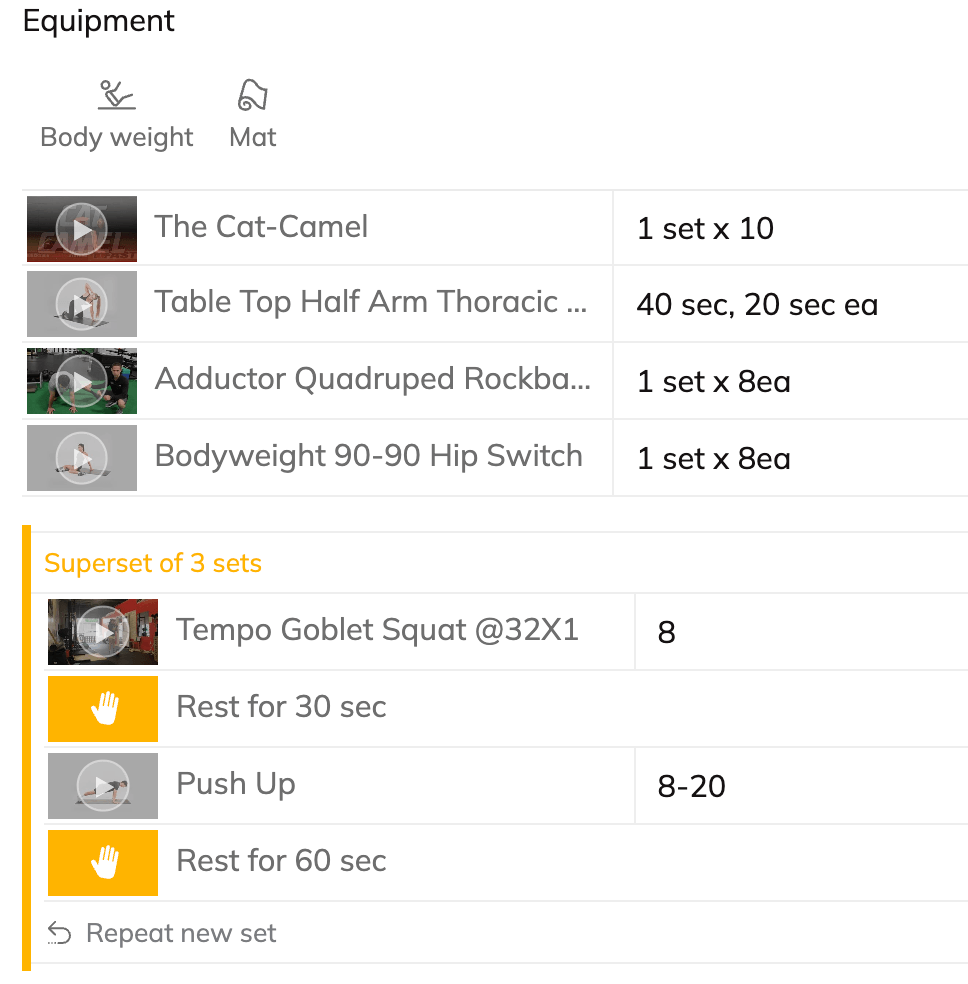
Then, do an Upper/Lower split on the weekend and get after it with more exercises and sets.
Need an example? Here’s a simple Upper/Lower split you can try this weekend. Just grab a pair of dumbbells and get after it.
Saturday: Upper Body Focus
A1. Incline Barbell Bench Press — 3 sets of 5-7 reps
B1. 1-Arm Dumbbell Row — 3 sets of 10-12 reps per side
C1. Alternating Dumbbell Overhead Press — 3 sets of 6-8 reps per side
C2. Neutral Grip Lat Pulldown — 3 sets of 10/8/6 reps
D1. Incline Bench Bicep Curls — 2 sets of 8-10 reps
D2. Cable Tricep Overhead Extensions — 2 sets of 12-15 reps
Rest 1-3 minutes between sets.
Sunday: Lower Body Focus
A1. Barbell Back Squat — 3 sets of 10 reps (increase intensity each set, ending with a RPE 9 third set)
B2. Dumbbell Romanian Deadlift — 3 sets of 8-10 reps
C1. Front Foot Elevated Split Squat — 3 sets of 8-10 reps
C2. Ab Wheel Rollout — 3 sets of 6 reps
D1. Kettlebell Swings — 3 sets of 15 swings
D2. Suitcase Carry — 2 sets of ~40 meters ea hand
Rest 1-3 minutes between sets.
This weekend-only training plan was the perfect fit for Joshua:
“I love the “snack” workouts during the week. Quick, short movements. Love it. Just enough to say you did something.”
— Joshua, coaching client
What about cardio?
Feel free to plug in a shorter, more intense cardio session during the week (instead of a quick strength workout), and then add longer cardio on the weekend if you have time.
Another strategy I recommend: use weekdays to rack up steps.
Whether it’s walking the dog after work or an evening stroll with your spouse, we know walking is powerful for your health — and it usually takes less mental effort (aka activation energy) than a full workout.
Ready to Build Your Weekend Warrior Plan?
If you’ve been struggling to stay consistent during the week, you’re not failing — you might just need a plan that fits your life right now.
Starting with two solid workouts on the weekend can be the simple shift that makes everything else feel easier.
And if you want help building a plan around your schedule (instead of squeezing into someone else’s), that’s exactly what we do with our coaching clients. Learn more about coaching here.

B.J. holds a B.S. in Health and Human Performance and multiple certifications, including Precision Nutrition Level 1 and BioForce Certified Conditioning Coach. Over his 14-year coaching career, he’s been fortunate enough to coach a wide range of clients. From online clients looking to get in great shape to CEO Nate Checketts (Rhone) and CEO Marcelo Claure (Softbank), and professional skateboarder Sean Malto. Before beginning his training career, he was a sports science lab research assistant.
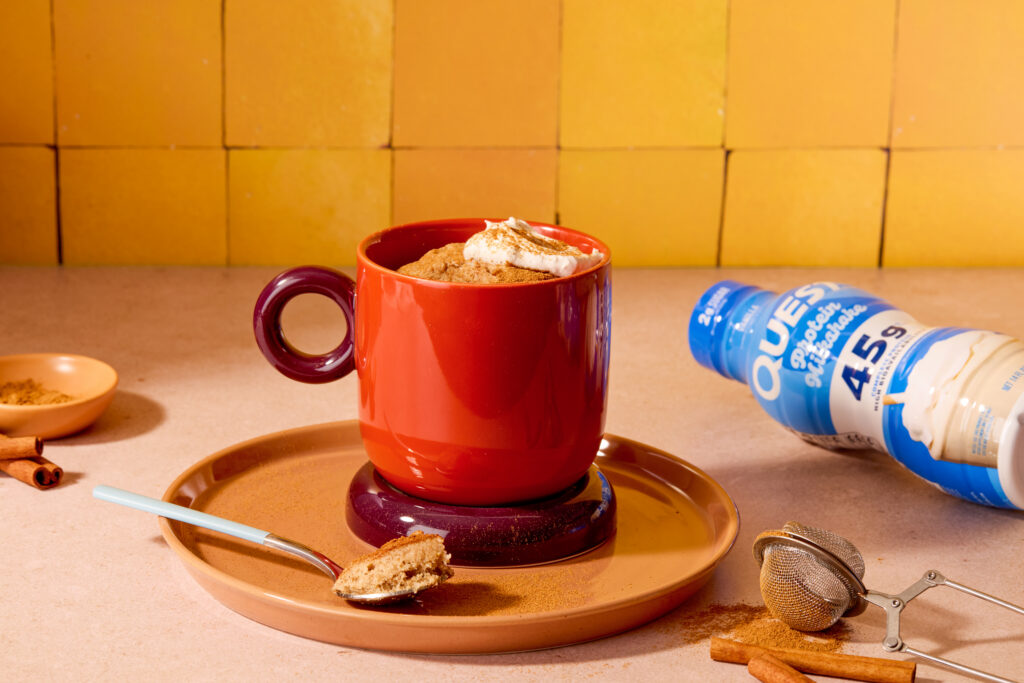
Quest Vanilla Spiced Mug Cake Recipe
At some point, “vanilla” became shorthand for boring, and frankly, we’re not sure who authorized that. Questified Vanilla Spiced Mug Cake would like the record corrected. Quest Vanilla Flavored Protein Milkshake gets mixed up with cinnamon and allspice, then emerges warm, fluffy, and decidedly more delicious than the haters would suggest. Top it with whipped cream and another dusting of cinnamon. Vanilla would like an apology.
Check out the full recipe below:

NUTRITIONAL INFO
VANILLA SPICE MUG CAKE
Yields: 2 servings | Serving Size: 1/2 mug cake
Calories: 120 | Protein: 10g | Fat: 5g | Net Carb: 8g
Total Carb: 10g | Sugar: 0g
Ingredients
VANILLA SPICE MUG CAKE
- ¼ cup + 2 tbsp Quest Vanilla Milkshake Protein Shake
- 1 egg white
- 2 tbsp gluten free flour
- 2 tbsp almond flour
- 1 tbsp coconut flour
- ½ tsp zero calorie sweetener
- ¼ cup baking powder
- ¼ tsp cinnamon
- ⅛ tsp all spice
- Pinch salt
Method
- Place the dry ingredients into a bowl and whisk to combine.
- Add in the Quest Vanilla Protein Shake and egg white and stir until no dry spots remain.
- Spray a mug with non-stick spray and pour the batter into the bottom.
- Cook the mug cake in the microwave on high for 60-80 seconds.
- Top with more cinnamon or whipped cream and serve.
-
 HEALTH & WELLNESS8 years ago
Acidophilus: A Probiotic Bacterium
-

 herbs3 years ago
The Ultimate Guide to Ashwagandha Extract: Stress Relief and Optimal Health Unveiled
-
 HEALTH & WELLNESS7 years ago
Herbs and Essential Oils to Fight Coronavirus
-
 TRAINING & FITNESS8 years ago
6 Ways to Decrease your Shoulder Pain!
-
 Fitness8 years ago
“No Pain, No Gain” True or Just a Fitness Myth
-
 HEALTH & WELLNESS8 years ago
Why Muscles Get Sore
-
 DIET & NUTRITION8 years ago
Low Carb Diet: Carbohydrates Influence on Testosterone
-
 TRAINING & FITNESS7 years ago
Training to Failure Every Set… Pathway to New Muscle or Pathway to Overtraining?