
Uncategorized
Questified Nacho Bites | Quest Blog

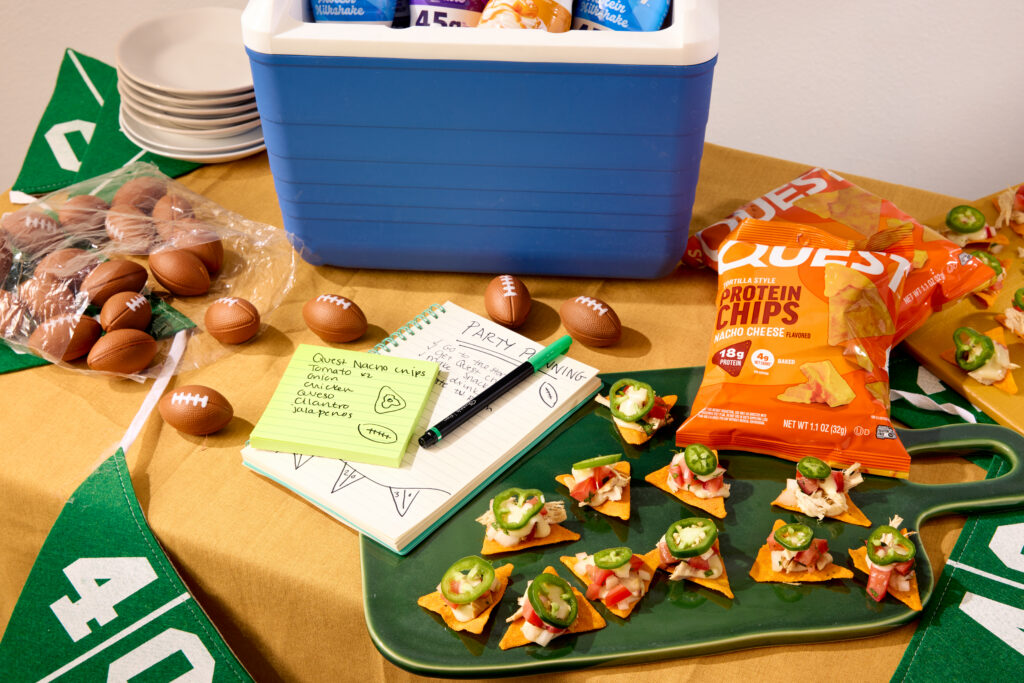
Questified Nacho Bites | Quest Blog

You packed the cooler, hauled the chairs, and are the reason the crew shows up hungry and leaves happy. So bring out the MVP: Questified Nacho Bites. Crunchy Quest Nacho Cheese Protein Chips loaded with fresh pico, shredded chicken, jalapeño, warm queso, all loaded with high quality protein. Feed the team and take your victory lap. You earned it.
Check out the full recipe below:
NUTRITIONAL INFO
QUEST NACHO BITES
Yields: 6 servings | Serving Size: 4 nacho bites
Calories: 110 | Protein: 13g | Fat: 4g | Net Carb: 4g
Total Carb: 5g | Sugar: 2g
Ingredients
QUEST NACHO BITES
- 2 bags Quest Nacho Cheese Tortilla Chips
- 1 roma tomato
- ¼ yellow onion (small)
- 1 tbsp chopped cilantro
- Squeeze of lime
- Salt and pepper to taste
- 1 jalapeno, thinly sliced
- 6oz shredded chicken breast
- ⅓ cup queso, warmed
Method
- Lay all the chips on flat on serving trays.
- Dice tomato and onion and place them into a small mixing bowl.
- Add in the cilantro, lime and salt and pepper and then combine.
- Place the queso into a pipping bag or spoon about 1 quarter teaspoon onto each chip, layer with pico de gallo, chicken breast, jalapeno and more queso.
- Serve.
Matt’s 30-Pound Sustainable Fat Loss Success Story
In less than a year, our client Matt lost 31.5 pounds and shrunk his waist by over 20 cm (nearly 8 inches).
But it wasn’t magic.
Sometimes it takes seeing yourself through a different lens to spark real change.
For Matt, that moment came during a Bali vacation in May. Looking at his photos, he knew something had to shift. With his 40th birthday on the horizon, he set an ambitious goal: to get into the best shape of his life.
“I’ve always been the guy who was in the gym,” Matt reflects. “Lifting with no real purpose and doing cardio—I called that a day.” But those vacation photos revealed a truth he couldn’t ignore. Despite his consistent gym presence, the results weren’t matching his efforts.
What Sparked Matt’s Sustainable Fat Loss Journey
Matt’s fitness journey began long before his Bali revelation.
At his heaviest in high school, he weighed nearly 300 pounds. By age 25, he’d lost 110 pounds and maintained a weight between 180-190 pounds. He even reached 168 pounds at one point, but as he describes it, he was “skinny fat”—the scale showed progress, but the mirror told a different story.
And despite his regular gym attendance, Matt’s workouts lacked structure. “I was your typical gym bro. Do Bis, Chest and Traps, and you’re good was my mindset.”
The frustration with plateaued progress set the stage for a change in approach—one that would finally align his efforts with his goals.
After interviewing several coaches, he found Born Fitness offered something different—a genuine investment in his success rather than treating him as just another client.
“I essentially did a Carrie Underwood and said, ‘Take the wheel!’” Matt recalls.
How Coaching Helped Matt Break Through His Fat Loss Plateau
One of the first things Matt committed to was tracking his food intake using MyFitnessPal.
We didn’t take a restrictive approach or eliminate entire food groups. Instead, the focus was on consistently hitting calorie and protein targets each day. That’s it. While you’ll likely need to adjust your calorie goals throughout the fat loss process, this simple approach helps you avoid overwhelm.
And rather than aiming for perfection, we emphasized awareness. For Matt, that meant getting a better sense of portion sizes and being more intentional with meals.
What about his workouts?
Matt came in with a classic “gym bro” approach—chest day, arm day, repeat. What he didn’t have was a structured, progressive plan.
We changed that.
Each 4-6 weeks, Matt followed a fresh training phase. Every plan was customized, but the consistent themes were:
- Full-body or upper lower split sessions 3–4x per week to train more muscle more often
- Progressive overload (increase weight, reps, or control over time)
- Conditioning finishers (sleds, circuits, intervals) to boost calorie burn without adding hours of cardio
This combination gave Matt the right amount of challenge without overtraining. He wasn’t left guessing what to do—and that structure freed him to focus on execution.
The result: For the first time, nutrition and training worked together, instead of against him. And that alignment unlocked progress he hadn’t seen in years.
As of June 2025, Matt’s results speak for themselves.
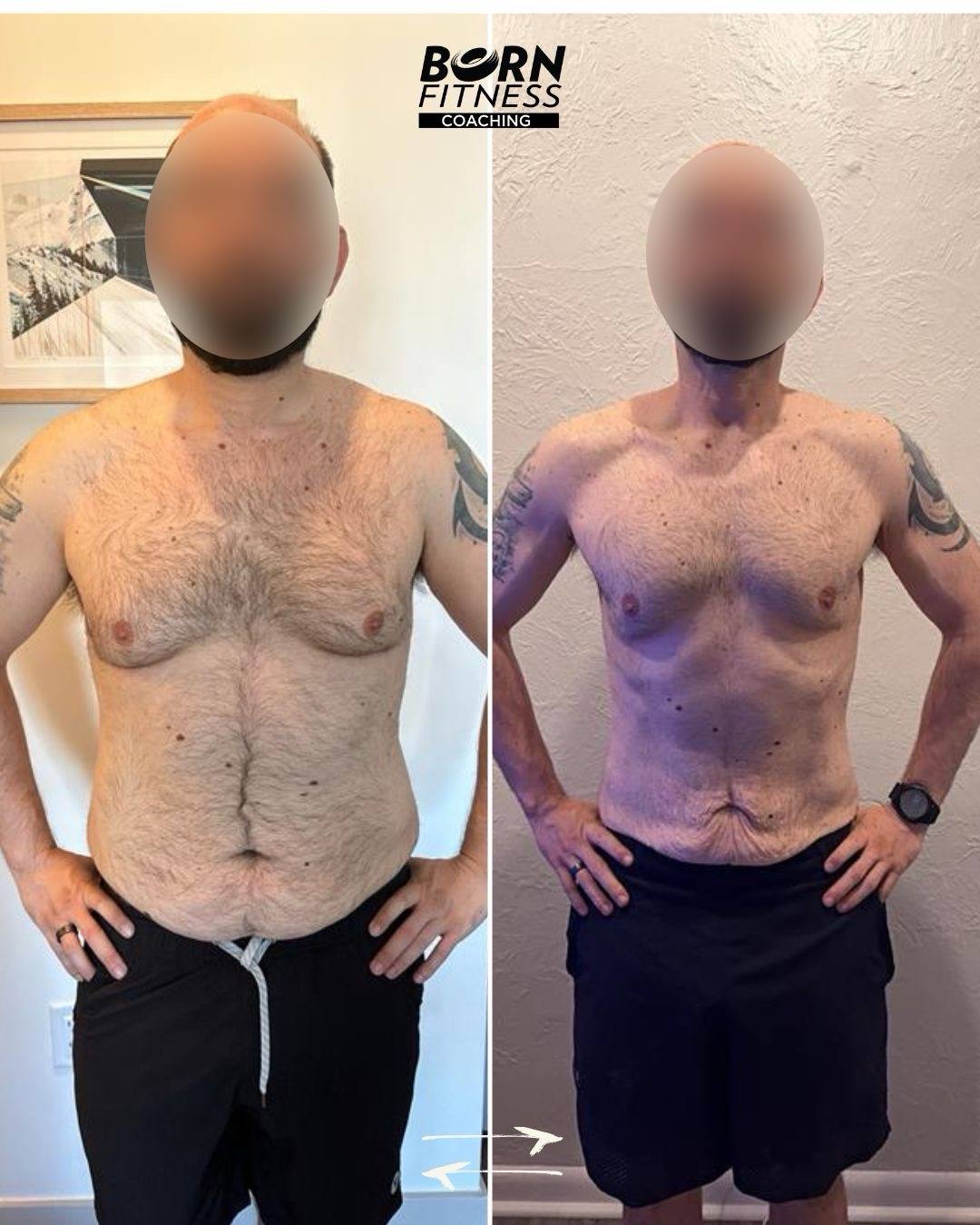
His weight dropped from 192.1 pounds to 160.6 pounds. His waist measurement decreased from 100.3 cm to 79.4 cm. That’s more than 30 pounds of fat loss and a full wardrobe transformation.
His strength skyrocketed—going from zero to three unassisted pull-ups and increasing his incline bench weights by over 60%.
But the numbers only tell part of Matt’s story.
For the first time, he’s shopping in the small size section—a milestone he never imagined possible. “I don’t say small in a way that means that I lost muscle. My strength has never been higher, but now clothes are fitting in ways that I never dreamed of.”
From Quick Fixes to Lasting Results
His relationship with food transformed too.
Instead of restrictive dieting, he learned to make smarter choices while still enjoying his favorites. “She doesn’t tell me to stop having Taco Bell,” Matt says about Coach Natalie, “but she would tell me ‘How can I make this healthier but still enjoy this?’”
This balanced approach has made his new lifestyle sustainable and enjoyable rather than feeling like a temporary fix.
On his 40th birthday, Matt sent this message:
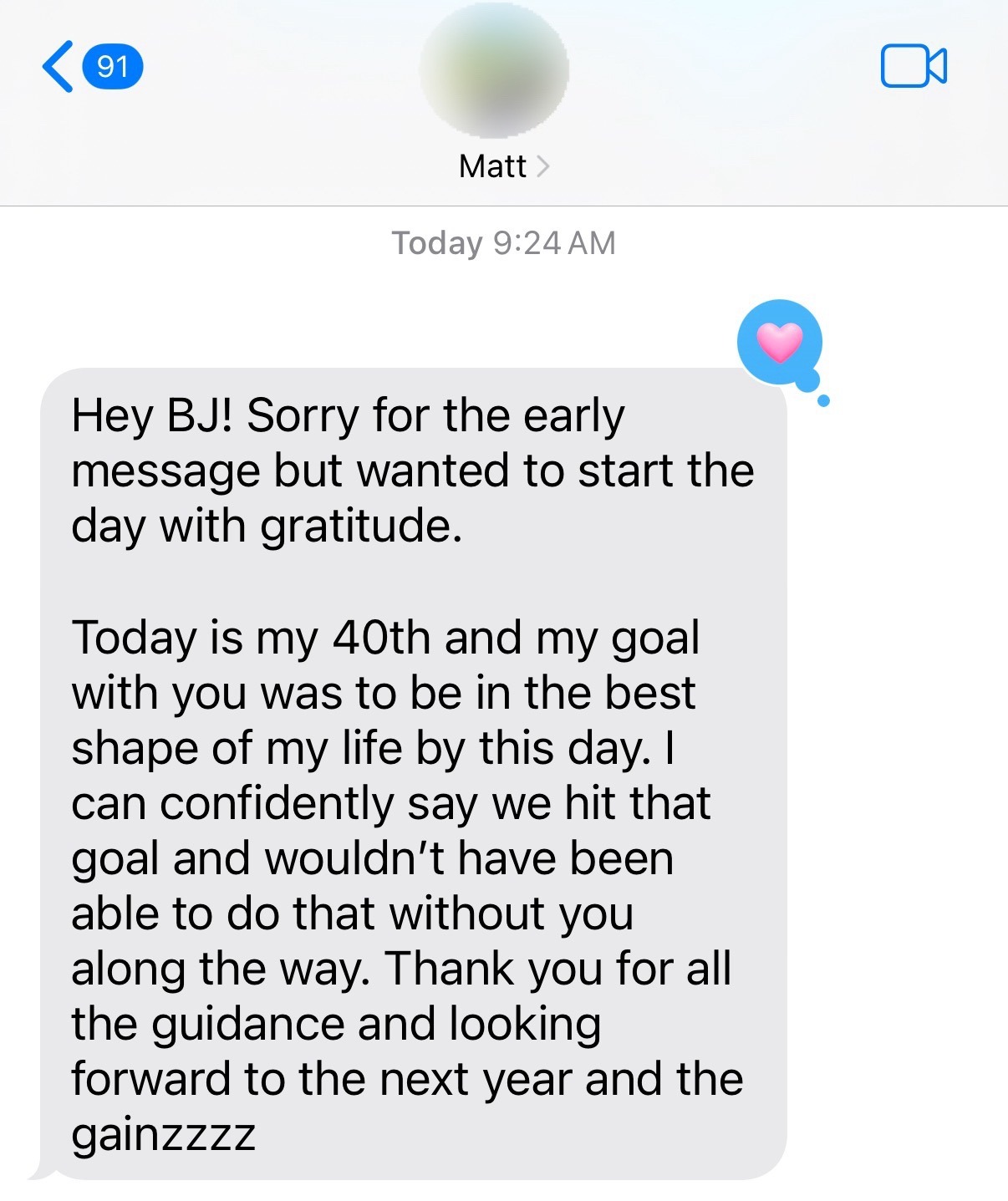
Matt’s transformation didn’t happen overnight—but it happened because he stopped winging it and found a plan that worked for him.
If you’re stuck trying to do this on your own and want the kind of structure and support Matt found, our coaching might be a fit for you.

B.J. holds a B.S. in Health and Human Performance and multiple certifications, including Precision Nutrition Level 1 and BioForce Certified Conditioning Coach. Over his 14-year coaching career, he’s been fortunate enough to coach a wide range of clients. From online clients looking to get in great shape to CEO Nate Checketts (Rhone) and CEO Marcelo Claure (Softbank), and professional skateboarder Sean Malto. Before beginning his training career, he was a sports science lab research assistant.
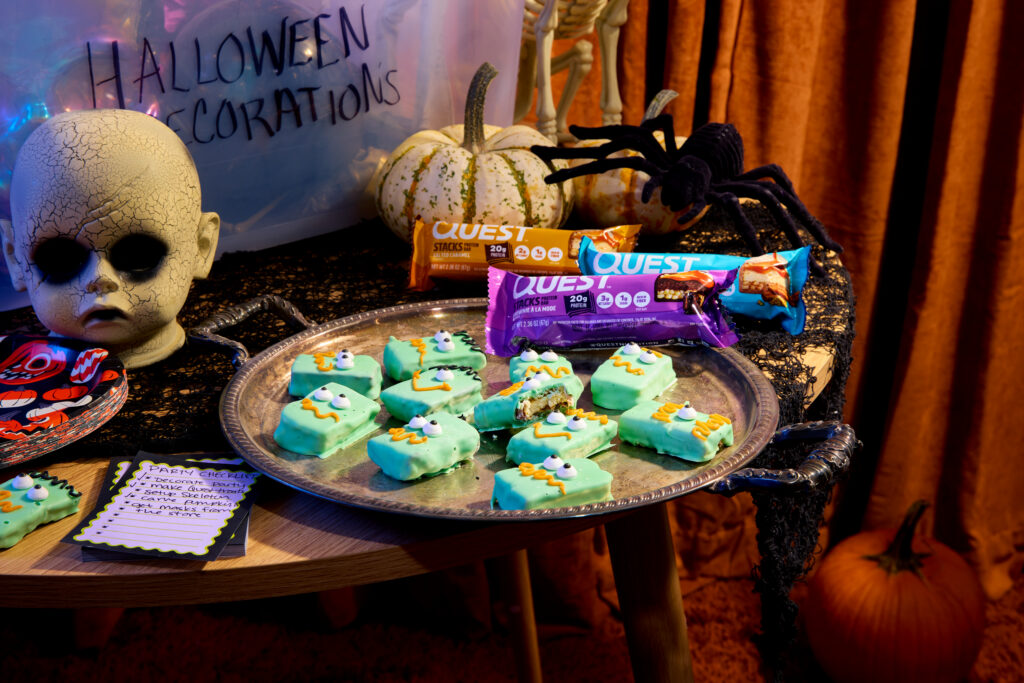
Quest White Chocolate Dipped Monster Treat (Halloween Recipe)
Halloween isn’t just a holiday for you. It’s a competitive event with costumes. And if you’re doing it, you’re going big. Questified White Chocolate Dipped Monster Bites turn Quest Salted Caramel, Brown Sugar, and Brownie A La Mode Flavor Stacks Bars into a tiny starting lineup of deliciously spooky, protein-packed monsters. Try not to eat the whole roster before trick-or-treaters arrive.
Check out the full recipe below:
NUTRITIONAL INFO
WHITE CHOCOLATE DIPPED MONSTER TREAT
Yields: 12 servings | Serving Size: 1 monster treat
Calories: 90 | Protein: 5g | Fat: 5g | Net Carb: 8g
Total Carb: 12g | Sugar: 2g
Ingredients
WHITE CHOCOLATE DIPPED MONSTER TREAT
Method
- Open each bar and turn them on their side to cut length wise in half and then in half again to make 4 evenly sized rectangles out of each bar (12 pieces).
- Melt the white chocolate and coconut oil in a microwave safe bowl until smooth. Remove about ¼ cup of white chocolate and split into two new bowls.
- In the main bowl of white chocolate, add in green food coloring. In the remaining bowls, add orange and black.
- Dip each stacks bar piece into the chocolate, letting the excess drip off before placing it on a baking sheet lined with parchment paper. Repeat until you have dipped and covered each stacks bar in chocolate.
- Decorate with candy eyes. Add the orange and black white chocolate (reheat if needed) to a piping bag and decorate the monsters.
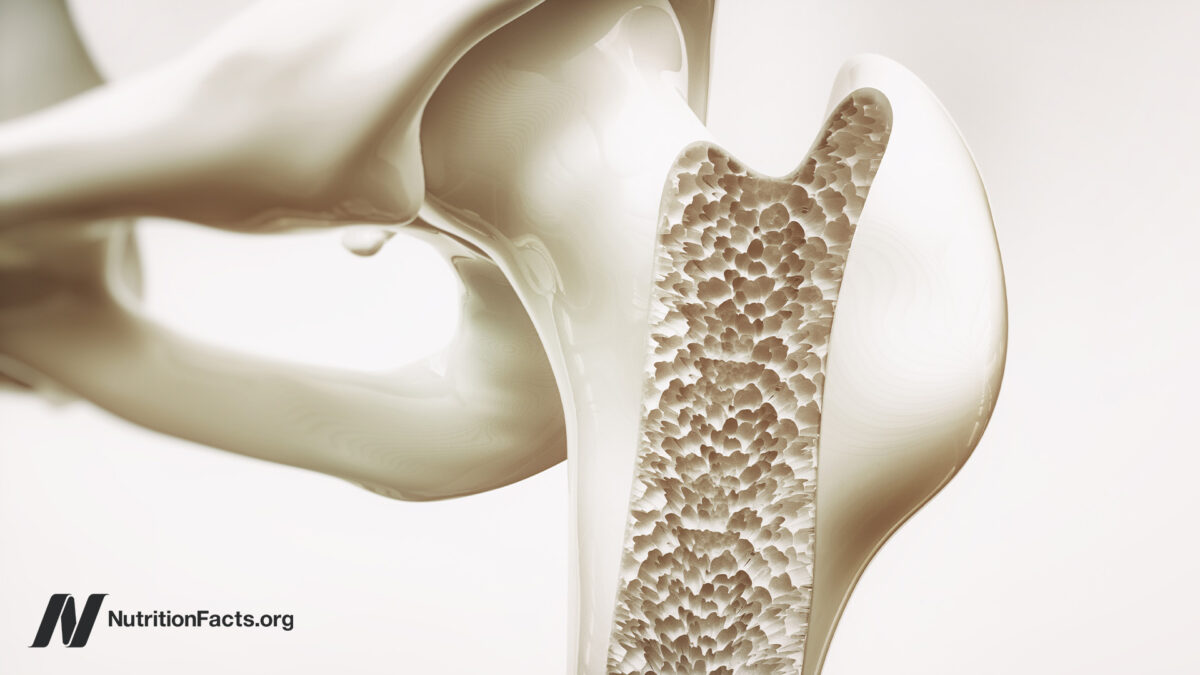
Is Bone Density Linked to Diet? It May Come Down to Body Size
Those eating a plant-based diet tend to be so much slimmer that their bone mass may suffer.
Osteoporosis affects an estimated 200 million people worldwide. Translating to “porous bone,” osteoporosis is a disease characterized by excessive bone loss, reduced bone formation, or a combination of both, which can weaken bones and increase the risk of fractures. “Bone mineral density (BMD) is the most robust and consistent predictor of osteoporotic fracture.” What can we eat to boost our bone density? Well, we know that increased consumption of plant foods is associated with increased bone mineral density.
There’s an “extensive range of micronutrients and phytochemicals packaged within plants” that can be powerful promoters of bone health, so “healthcare professionals should be encouraged to advise the increased consumption of plant based foods, particularly in mid-life, irrespective of the clients’ underlying dietary pattern”—meaning no matter how much meat or junk is eaten, adding more healthy plant foods may help prevent the development of osteoporosis. On the other hand, a more “animal-sourced nutrient pattern” has been associated with a higher risk of fractures, suggesting that a more animal-based diet is related to bone fragility. So, one would expect less osteoporosis in those eating plant-based diets, but you don’t know until you put it to the test.
The first study, “Incidence of Osteoporosis in Vegetarians and Omnivores,” was published nearly 50 years ago and found that the measured bones were significantly denser in the vegetarians than in the omnivores. In fact, the average bone densities of the vegetarians in their 70s was greater than that of the meat-eaters in their 50s. The bottom line: “These results suggest that there is less likelihood of vegetarians developing osteoporosis in old age.” It turns out, though, that the researchers screwed up. DEXA scanning, which is what we use now, didn’t come online until the 1980s. So, the researchers were using just regular x-rays and confused the readings, giving darker bones on x-rays a higher score, even though darker bones actually indicate “a lesser bone mass than a lighter image.” Their conclusion should have been reversed: The vegetarians had worse bone mineral density.
Fast forward about 40 years, by which time nine studies had been done on thousands of individuals. All in all, “[t]he results suggest that vegetarian diets, particularly vegan diets, are associated with lower [bone mineral density], but the magnitude of the association is clinically insignificant,” meaning the difference was so small as to not really matter out in the real world, reinforcing the fact that “vegetarian diets have no clinically detrimental effect on bone health.”
It’s important to note that the findings of lower bone mineral density didn’t fully control for key confounding factors, such as differences in body weight. We know that people who are obese have stronger bones. Why? Because they’re essentially weight-lifting all day, every day. Walk around with a 100-pound backpack every day, and your bones would grow stronger, too. That’s how to build strong bones: weight-bearing exercise. So, people who weigh more have denser bones. Vegetarians and especially vegans have such low rates of obesity that no wonder, on average, they would have lower bone density. The researchers didn’t take weight into account, but if the difference they found isn’t even clinically significant, who cares? “Is ‘vegetarianism’ a serious risk factor for osteoporotic fracture?” As of 2009, the answer to that question was no. “Vegetarianism is not a serious risk factor.”
By 2018, the latest meta-analysis on veganism, vegetarianism, and bone mineral density included 20 studies, involving tens of thousands of participants. It found lower bone mineral density among vegetarians and vegans compared with meat-eaters. The researchers concluded that vegetarian and vegan diets need to be “appropriately planned” to preserve their bones. But did they account for the obesity factor?
No, they did not. They just used what are called “crude risk ratios”—meaning no adjustments are made for confounding factors like weight—so they didn’t control for things like age, smoking, obesity, or exercise, making the results really “uninterpretable.” But no one had gone through the trouble of going back through all those studies and making the proper adjustments. Then, in 2020, researchers did just that. The title of their study gives away what they found: “Differences in Bone Mineral Density between Adult Vegetarians and Nonvegetarians Become Marginal when Accounting for Differences in Anthropometric [Body Size] Factors.” Yes, bone mineral density values were significantly lower among vegetarians than among nonvegetarians, which is the case with nearly every study on bone mineral density and excess body weight, as you can see below and at 4:58 in my video Do Vegans Have Lower Bone Mineral Density and Higher Risk of Osteoporosis?.
But forget clinical significance—these differences even lost statistical significance after adjusting for body size factors, suggesting that lower bone mass among vegetarians is largely explained by their lower Body Mass Index (BMI) and waist circumference. Thus, it’s not so much the composition of vegetarian and vegan diets as the fact that people who eat them tend to be much slimmer.
Now, a small yet statistically significant difference remained for total lower spine density, a difference of 0.03 g/cm2. This was dismissed as having little clinical relevance, but is that true? If the reproducibility of bone mineral density measurements in daily medical practice is considered, repeated tests performed back to back show some scatter in the measurements, as you can see at 5:44 in my video.
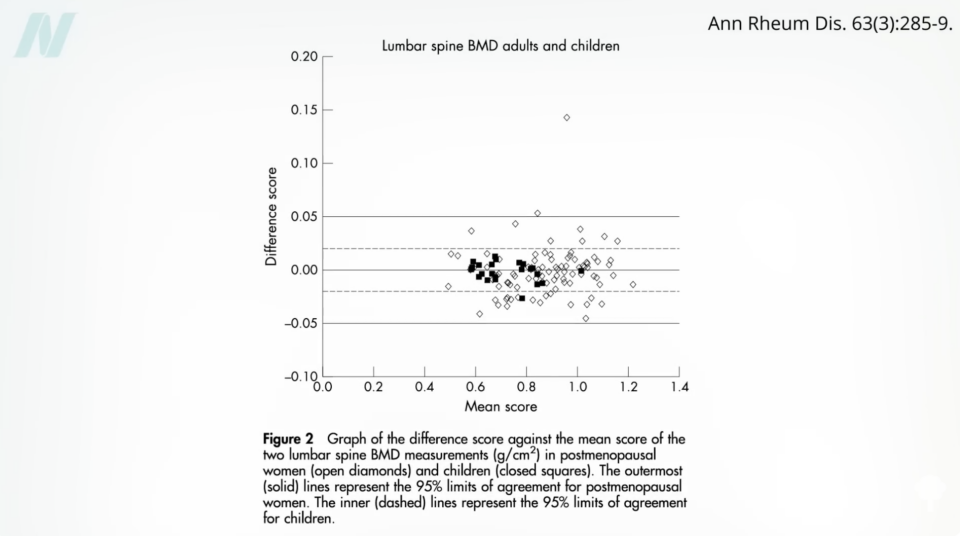
So, a significant difference really has to be more than the inherent variation. Indeed, expressed as the smallest detectable difference, a bone mineral density disparity of at least 0.05 g/cm2 at the spine is needed before it can be considered a significant change, so there does appear to be little clinical relevance. However, even if vegetarians and vegans basically have the same bone density at the same weight, everyone who is skinny is at risk. Low BMI is a risk factor for fractures; so, “all persons in a low body weight category consuming any kind of diet should be monitored for osteoporosis.”
Doctor’s Note
Stay tuned for more on actual bone fracture rates. In this blog, I’m just setting the stage.
In the meantime, check out some of my other videos on bone health:
-
 HEALTH & WELLNESS8 years ago
Acidophilus: A Probiotic Bacterium
-

 herbs3 years ago
The Ultimate Guide to Ashwagandha Extract: Stress Relief and Optimal Health Unveiled
-
 HEALTH & WELLNESS7 years ago
Herbs and Essential Oils to Fight Coronavirus
-
 TRAINING & FITNESS8 years ago
6 Ways to Decrease your Shoulder Pain!
-
 Fitness8 years ago
“No Pain, No Gain” True or Just a Fitness Myth
-
 HEALTH & WELLNESS8 years ago
Why Muscles Get Sore
-
 DIET & NUTRITION8 years ago
Low Carb Diet: Carbohydrates Influence on Testosterone
-
 TRAINING & FITNESS7 years ago
Training to Failure Every Set… Pathway to New Muscle or Pathway to Overtraining?